
Investigation reveals factory farming industry’s early access to the European Commission as new animal welfare policies took shape
Animal Equality has obtained documents showing that one of Europe’s leading factory farming industry coalitions requested a meeting with Commissioner Christophe Hansen’s Cabinet just 20 days into the Commission’s mandate, accompanied by five “recommendations”.
When the new European Commission took office at the end of 2024, it inherited one of the most closely watched commitments of the previous mandate: delivering long-promised reforms to improve animal welfare across the European Union, including the phase-out of cages and an end to the routine killing of male chicks.
At the same time, different stakeholders were beginning to present their priorities to the new Commissioners.
An investigation by Animal Equality, based on documents obtained through Freedom of Information requests, has now shed light on who gained early access to those discussions and the proposals they put forward during the first weeks of the new mandate.
A meeting request weeks after the new Commission started
Among the documents disclosed by the European Commission is a letter dated 20 December 2024 from European Livestock Voice (ELV), a coalition representing several organisations from across the livestock sector.
Addressed to the Cabinet of Agriculture Commissioner Christophe Hansen, the letter requested a meeting and set out five recommendations concerning the future direction of European livestock and animal welfare policy.
According to the independent investigation Animal Welfare Wrecked by Lighthouse Reports, ELV played a key role in the de facto blocking of the EU’s previous proposal to phase out cages.
The correspondence was sent only twenty days after the beginning of the Commission’s mandate, at a time when the political priorities for the new legislative cycle were still taking shape.
What did the farming industry ask for?
The documents show that European Livestock Voice encouraged the Commission to place strong emphasis on economic and competitiveness considerations before introducing new animal welfare legislation.
Among its recommendations were:
- carrying out socio-economic assessments before proposing new animal welfare rules;
- ensuring that farmers and other agri-food operators can adapt to future regulatory changes
- protecting the competitiveness of European farming producers;
- promoting innovation and technological solutions in areas such as animal breeding and animal nutrition;
- developing a broader EU strategy for the farming sector.
- prevent generalised recommendations against foods of animal origin.
These recommendations formed part of the industry’s contribution to the policy debate during the earliest phase of the Commission’s mandate.
Why are these documents significant?
The investigation does not seek to establish that the Commission adopted the livestock industry’s proposals.
Instead, the documents help reconstruct an important part of the policy-making process by showing which stakeholders were able to present detailed recommendations to the Commission while future animal welfare policies were still being developed.
Understanding who has access to European decision-makers during these early stages is an essential part of ensuring transparency and public accountability.
A wider investigation into EU decision-making
The documents form part of a broader investigation by Animal Equality into how decisions on EU animal welfare legislation have been handled within the European Commission.
Between March and April 2026, the organisation submitted several Freedom of Information requests seeking records relating both to the preparation of the promised animal welfare legislation and to contacts between Commissioners’ Cabinets and representatives of the meat, poultry and egg industries.
Further findings from this investigation will examine how decisions surrounding the promised revision of EU animal welfare legislation were handled within the Commission and whether sufficient transparency was ensured throughout the process.
Transparency matters
European citizens have repeatedly called for stronger protection for animals raised in farming systems.
More than 1.4 million people supported the End the Cage Age European Citizens’ Initiative, prompting the European Commission to commit to revising EU animal welfare legislation.
Understanding how these decisions are prepared – and whose voices are heard during that process – is essential for ensuring that European policymaking remains transparent, accountable and responsive to the public interest.
Your voice must be heard where decisions are made
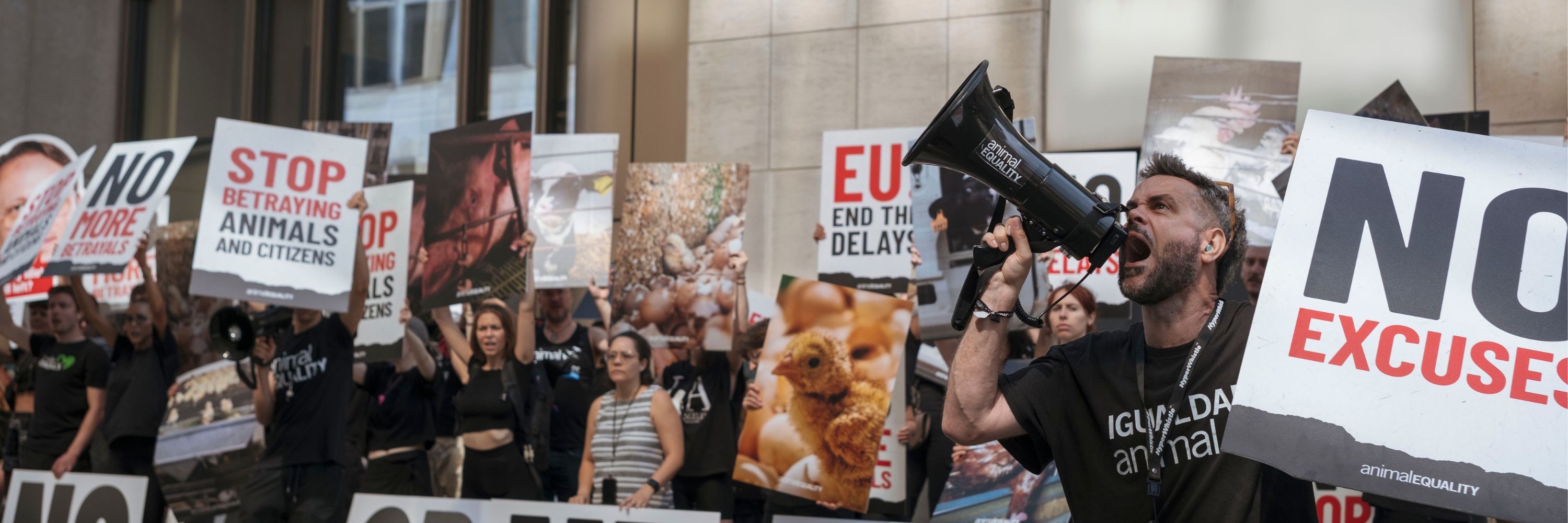
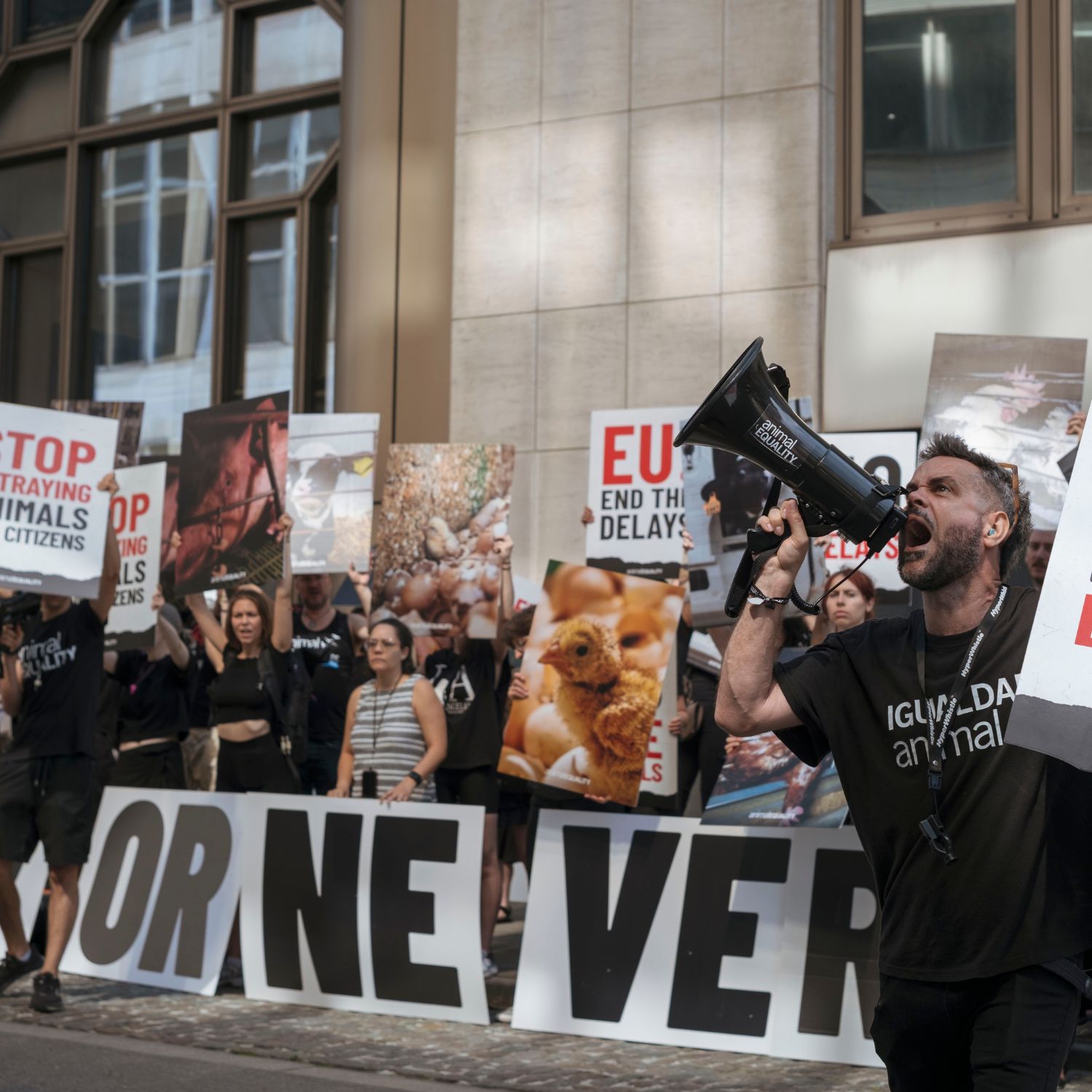
Join us in Brussels this September to call on the European Commission to deliver ambitious animal welfare legislation that reflects the public’s expectations, not the priorities of the factory farming industry.
PRESERVE FAMILIES
A curious chick recognises his mother’s voice and imprints on her immediately after hatching. You can defend these family bonds by choosing plant-based alternatives to eggs.