

Brazil bans foie gras and becomes the first country in Latin America to prohibit the product
Brazil has made history for animals. President Luiz Inácio Lula da Silva has signed a nationwide ban on the production, import, export, and sale of foie gras into law – making Brazil the first country in Latin America, and only the second in the world after India, to simultaneously prohibit both the production and sale of the product.
The achievement is the direct result of a six-year campaign led by Animal Equality in Brazil, which gathered over 310,000 petition signatures and the support of dozens of civil society organisations.
What the law means
Bill 90/2020 prohibits all foods obtained through the force-feeding of animals – a practice known as gavage, most commonly associated with foie gras production. The ban will come into effect 180 days after the law is published.
This is a historic moment. Foie gras represents one of the cruelest practices inflicted on animals exploited for human consumption, and this victory is even more significant because it happens in a country with major global weight in the livestock industry. Brazil has shown that ethical standards are not negotiable – not even under pressure from national and international economic interests. We are confident that this progress will inspire and drive change in other parts of the world.
– Sharon Núñez, President of Animal Equality.
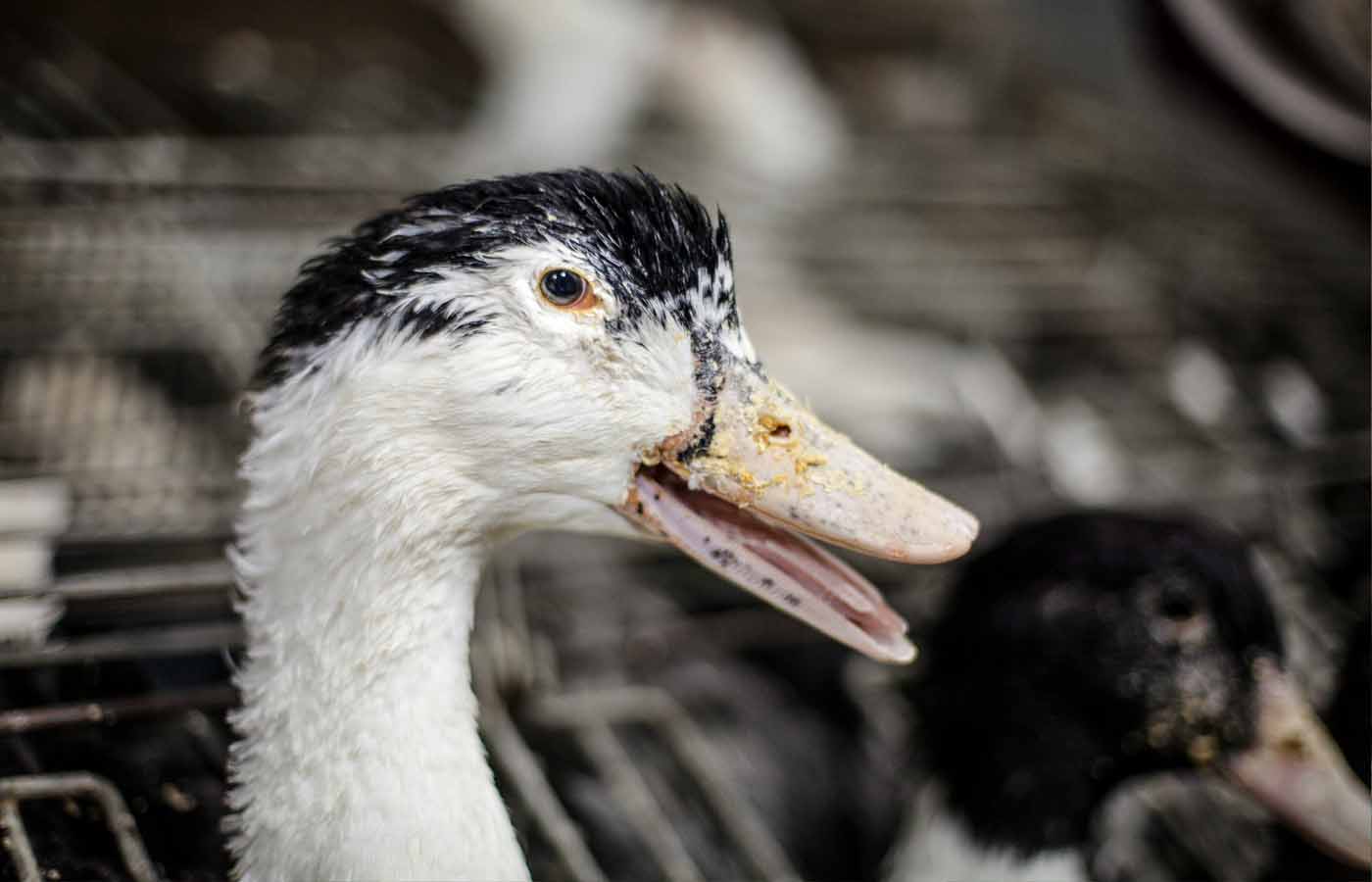
Foie gras is produced by force-feeding ducks and geese twice a day through a metal tube inserted directly into their throats, deliberately inducing hepatic steatosis – fatty liver disease – causing the organ to grow up to ten times its natural size. To put that in human terms: it would be the equivalent of forcing an adult to ingest around 13 kilograms of food in seconds, twice a day.
Six years in the making
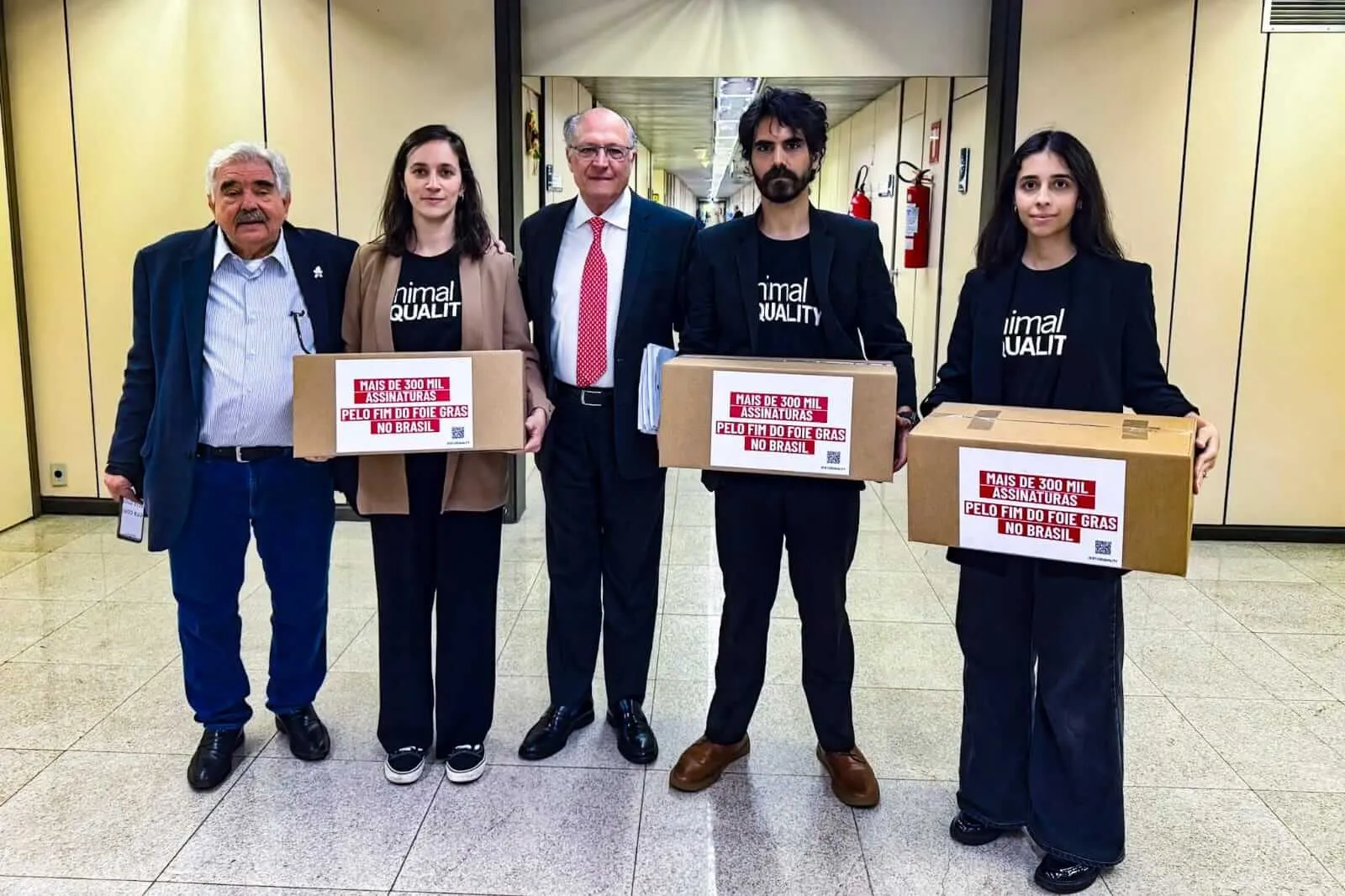
Since 2020, Animal Equality has led investigations on farms and slaughterhouses, mobilised hundreds of thousands of people, engaged directly with political leaders, and carried out public actions to expose the cruelty behind foie gras and push for this historic change.
Just the day before President Lula signed the bill, the Animal Equality team met with Brazil’s Vice-President, Geraldo Alckmin, delivering a clear message to the federal government: this cruelty must end for good.
This victory belongs to each of the more than 310,000 people who signed our petition and never let this issue fade from public attention. Brazil is becoming a reference for animal welfare in Latin America and shows that commercial interests cannot be placed above ethics and the will of society itself. We hope this achievement opens the path for similar progress in other countries in the region.
– Dulce Ramírez, Vice President for Latin America at Animal Equality.
Now the UK must act
Brazil’s ban sends a powerful message to the world: animal suffering is not a price worth paying – for any product, any industry, or any plate.
But whilst the production of foie gras has been illegal in the UK for over 20 years, the UK Government’s promised ban on foie gras imports is now at serious risk of being quietly dropped as trade negotiations continue behind closed doors.
Brazil acted. The UK made a promise to do the same. Now it must deliver.
Nearly 9 in 10 Brits support a ban on foie gras imports. The Government committed to one before the last election. With Brazil now leading the way, there is no credible justification for further delay.
Animal Equality UK is calling on the UK Government to honour its commitment and ban foie gras imports without delay.
END THE CRUELTY
Foie gras is immensely cruel. Its production causes ducks and geese severe physical and psychological pain. You can protect ducks and geese by opting for plant-based alternatives.