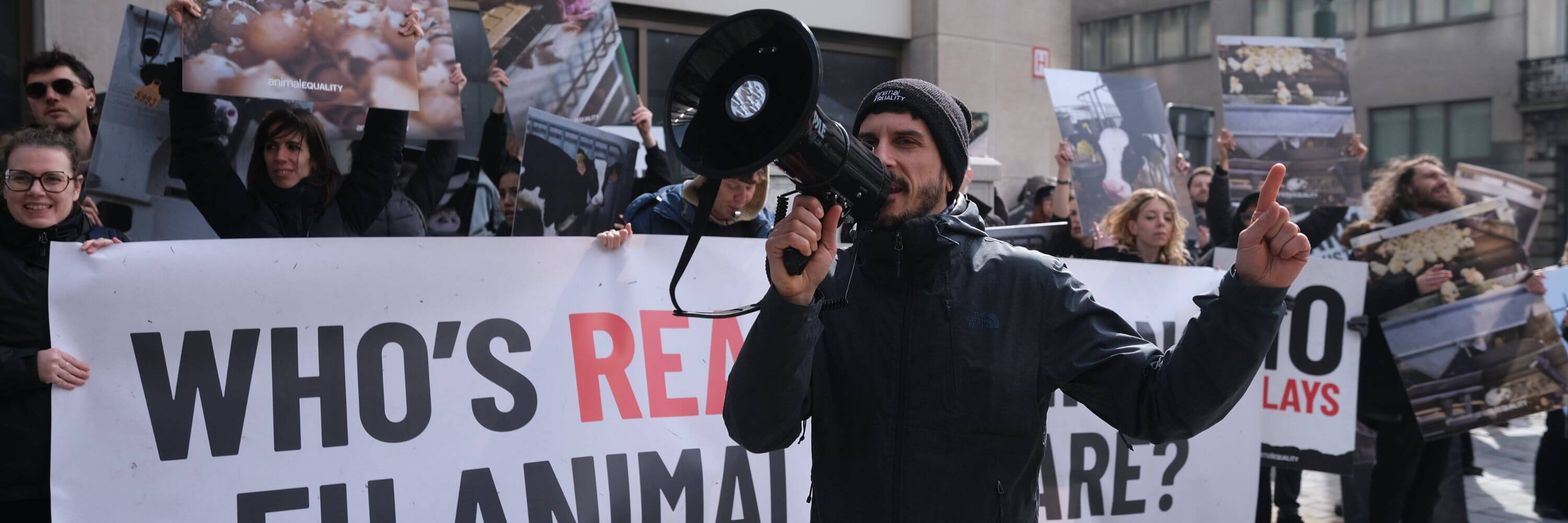
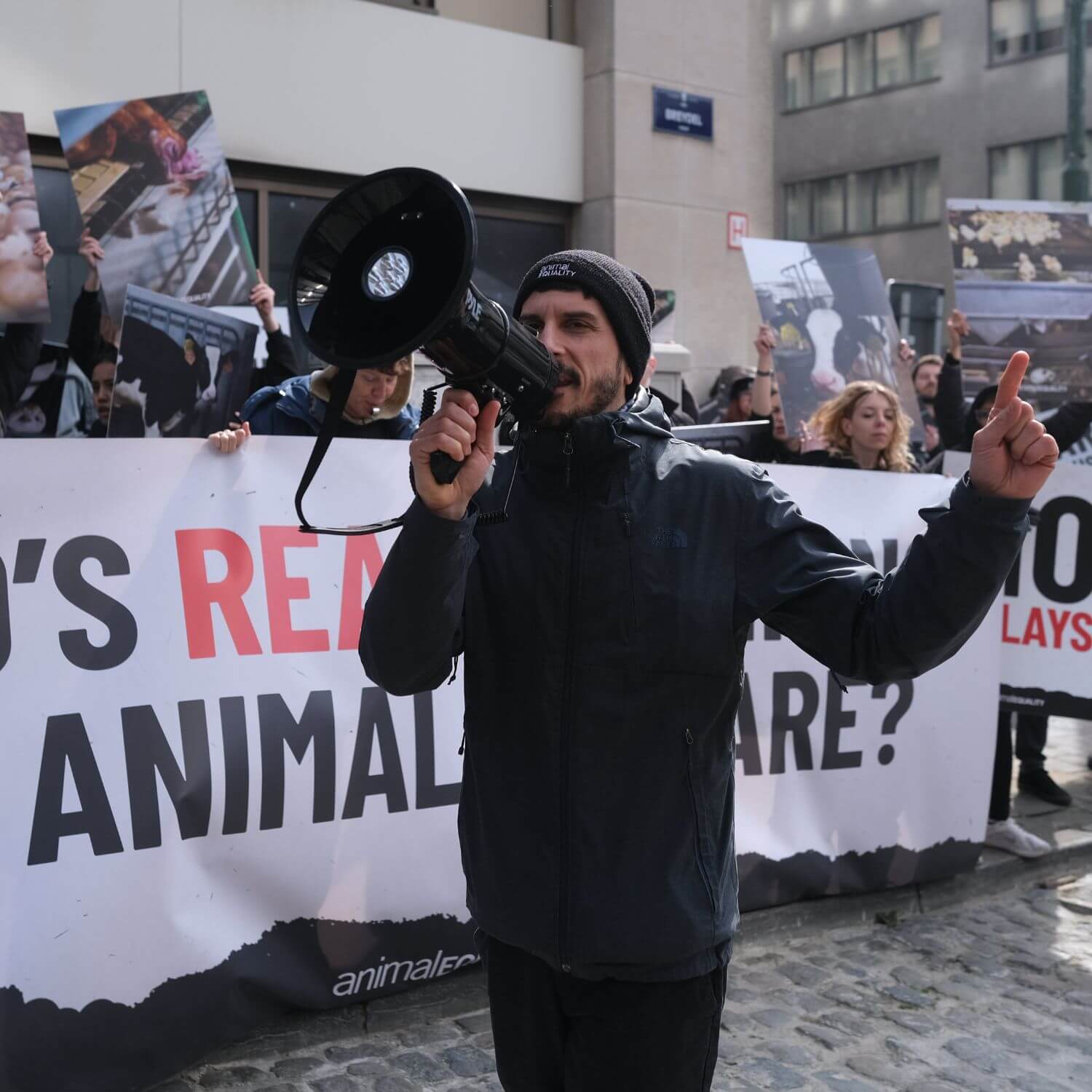
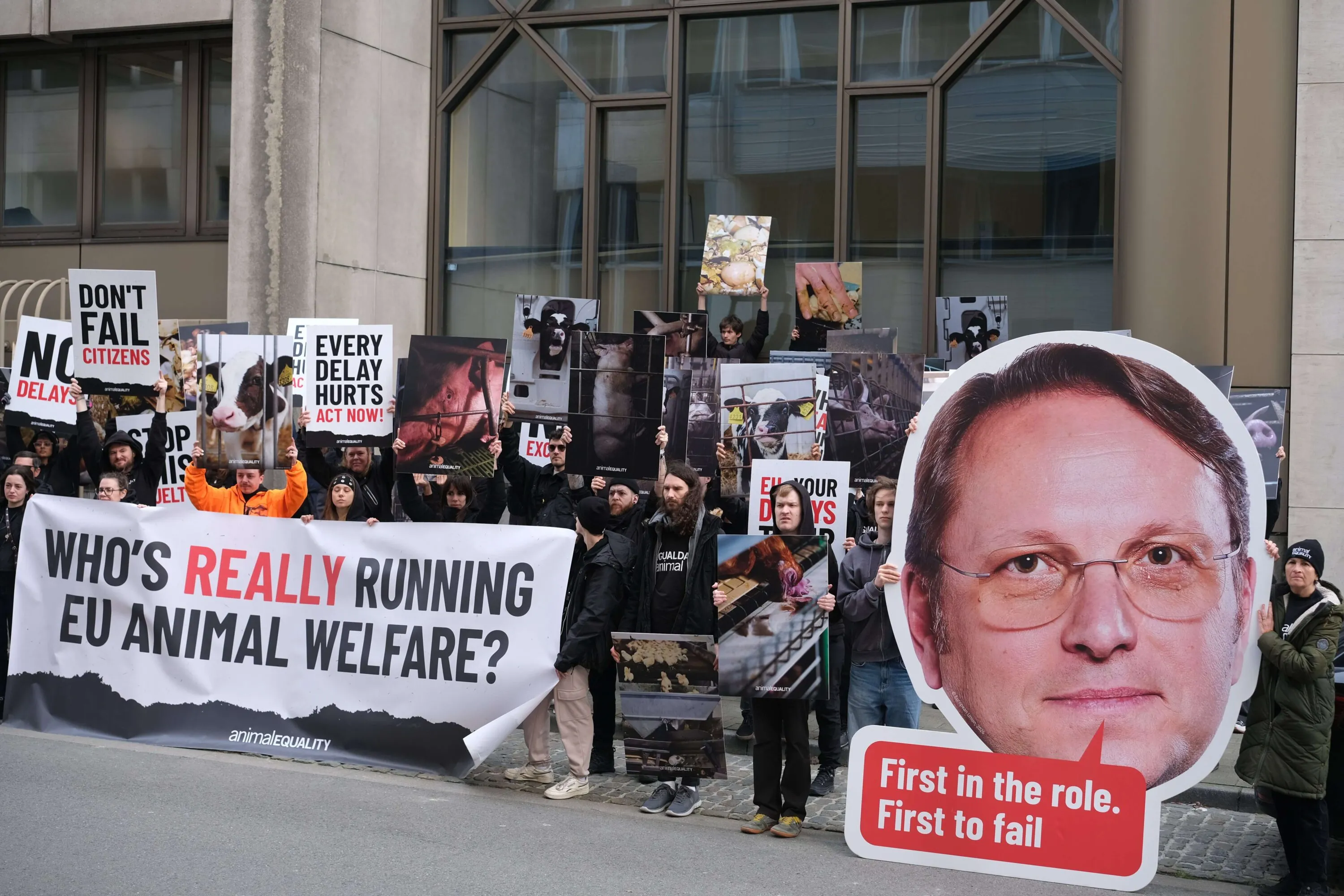
100 activists at the doors of Olivér Várhelyi, EU Commissioner for Health and Animal Welfare
It’s time for him to start listening to those who demand more rights for animals, not to the industries that profit from their suffering.
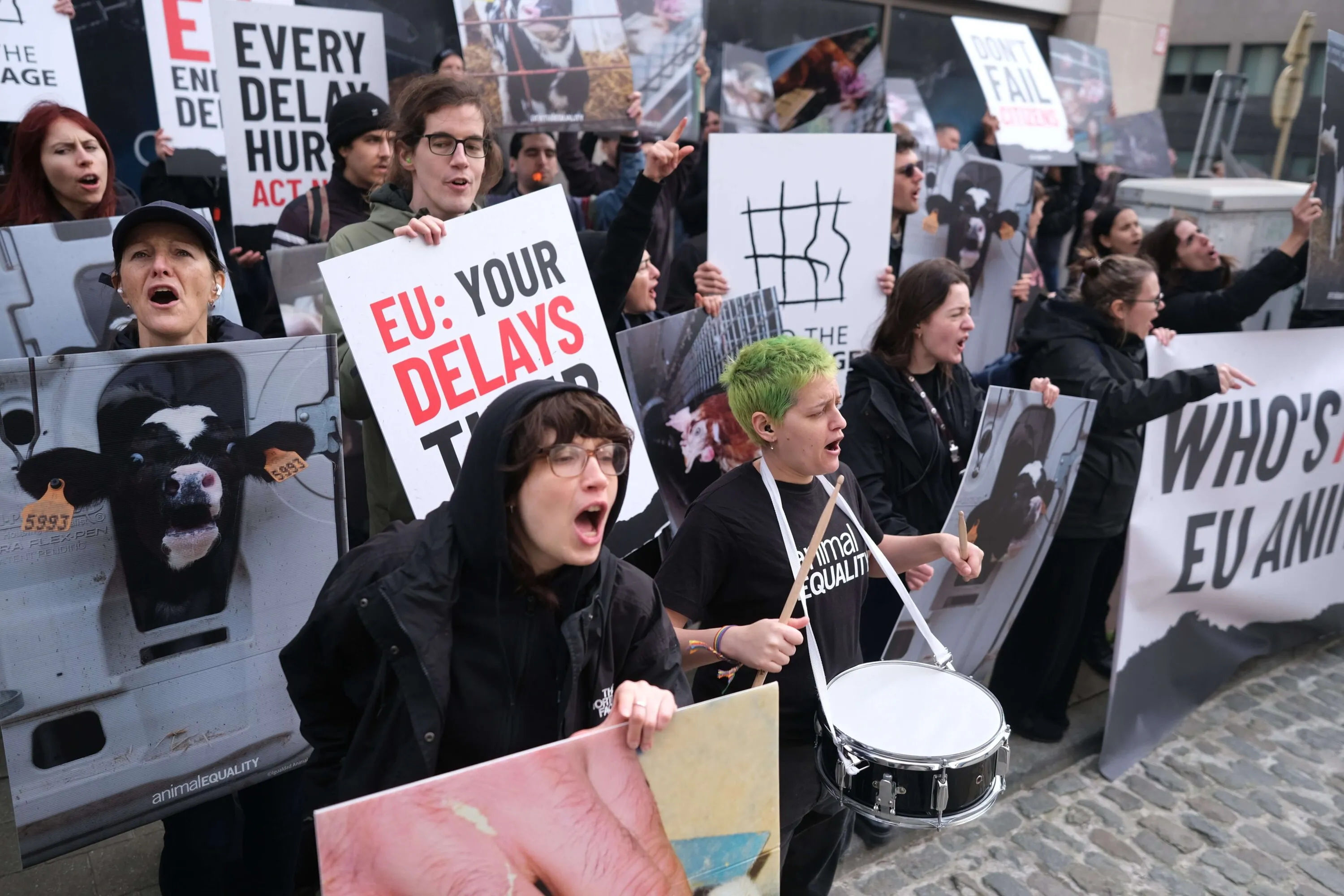
Two days of intense actions organised by Animal Equality in Brussels ended with a resounding finale: more than 100 activists from across Europe outside DG Santé, demanding to be heard.
At the heart of the EU institutions where animal welfare legislation is shaped, the message was impossible to ignore. For too long, the people inside those buildings have been hearing from the livestock industry far more often than from those defending animals.
The data about Olivér Várhelyi’s meetings with the industry
Animal Equality analysed 708 public meetings held by the two Commissioners responsible for animal welfare in the EU – Olivér Várhelyi (Health & Animal Welfare) and Christophe Hansen (Agriculture & Food) – including their cabinets, covering the period from mid-December 2024 to 11 March 2026. The results are damning.
The meat, poultry, and dairy industry discussed animal welfare with the two Commissioners at least 46 times. Animal welfare NGOs had the same access just 7 times. The ratio is 7:1 in favour of industry. In other words: the industry had 7 times more access.
In all 708 meeting subjects lines, the word “cage” does not appear once. Neither does “chick culling.”A closer look at Várhelyi and his cabinet reveals the same pattern. Out of their meetings, 40 addressed animal welfare with industry representatives, while only 4 were held with animal welfare NGOs.
Also the foie gras industry at the table of those who decide on animal welfare
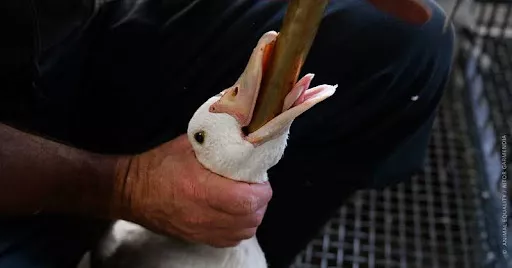
And then there is foie gras. On 13 February 2025, Commissioner Várhelyi met with Euro Foie Gras. The declared subject of the meeting was: “animal welfare and animal health.” Foie gras is produced through force-feeding ducks and geese, a practice that the European Food Safety Authority itself recognises as causing suffering to animals. The industry that built its business model on that suffering was invited to discuss animal welfare with the EU Commissioner responsible for it.
This is one of the reasons why 100 people showed up outside DG Santé on Tuesday 24 March. Because when the industry that force-feeds animals gets a seat at the table to discuss animal welfare, someone has to stand outside and say: enough. We did.
Two days that shook Brussels
The action at the DG Santé was the culmination of two days of actions that brought the fight to the heart of the EU institutions.
On Monday outside the Berlaymont – the European Commission’s headquarters – more than 100 activists gathered beneath a banner asking the question that the EU has been avoiding for years: who is really running EU animal welfare?
Three giant portraits of Várhelyi, Hansen, and Von der Leyen looked out over the crowd, the faces of those responsible for delays and inaction while 300 million animals remain confined in cages across Europe.And the fight is not over. We have already planned new actions to make the voices of animals heard, once and for all, by the European institutions. Disruptive actions that need the strength of activists who are done watching animal welfare legislation be delayed, diluted, and buried. You could be one of them. Join us in Brussels and find out everything you need to know.
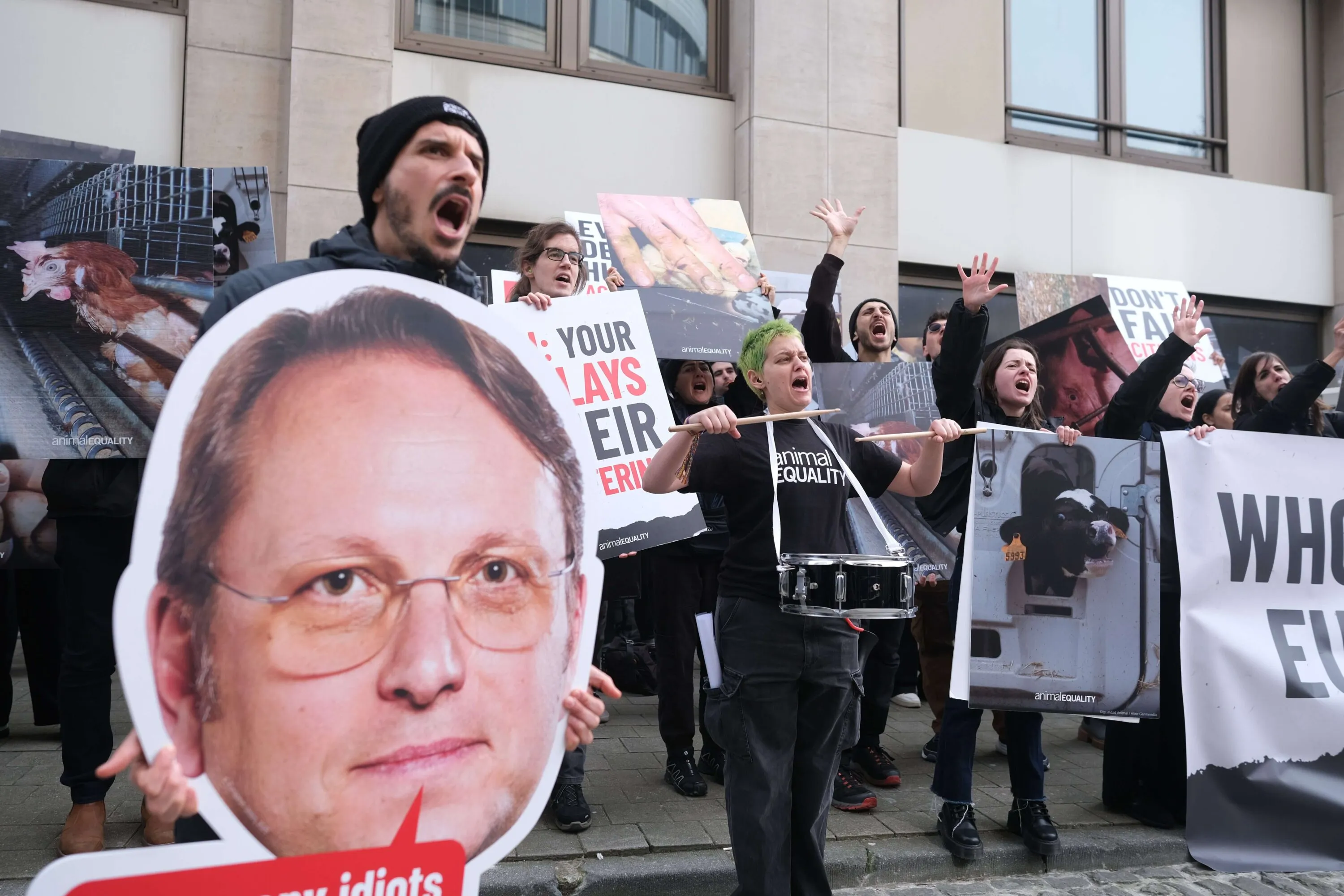
Animal Equality’s demands, and those of millions of citizens, are clear: the European Commission must deliver a revision of the animal welfare legislation that includes a full ban on cages and an end to the killing of male chicks, millions of whom are culled every day simply because they are not profitable.
Profit cannot come before animals and the will of citizens. The Commissioner can no longer ignore public demand in order to serve industry interests.
We have submitted a formal Freedom of Information (FOI) request for access to documents of the 708 public meetings. The Commission has until 1 April to respond.
PRESERVE FAMILIES
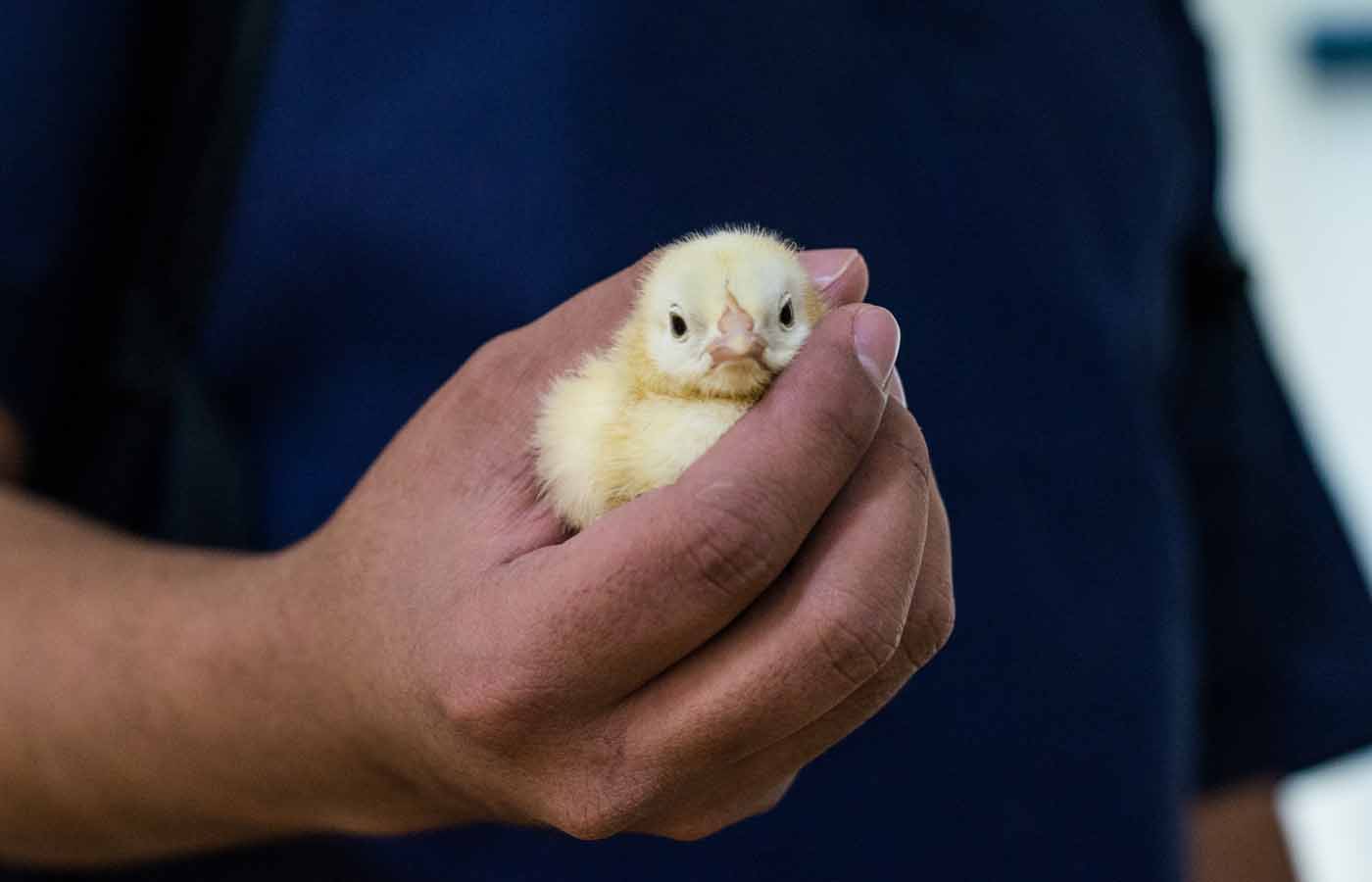
A curious chick recognises his mother’s voice and imprints on her immediately after hatching. You can defend these family bonds by choosing plant-based alternatives to eggs.