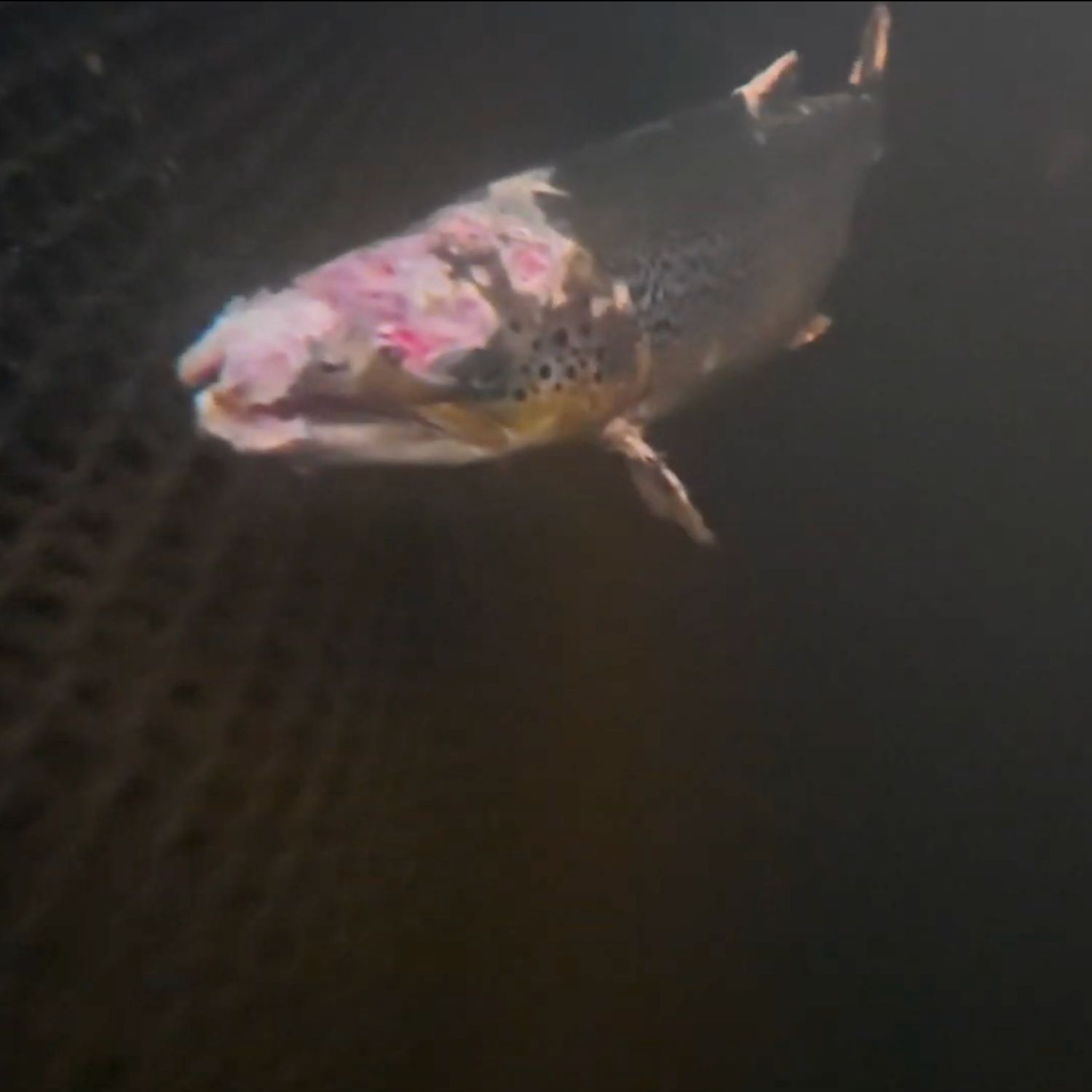
40% increase in formaldehyde use and 243% increase in environmental breaches on Scottish salmon farms
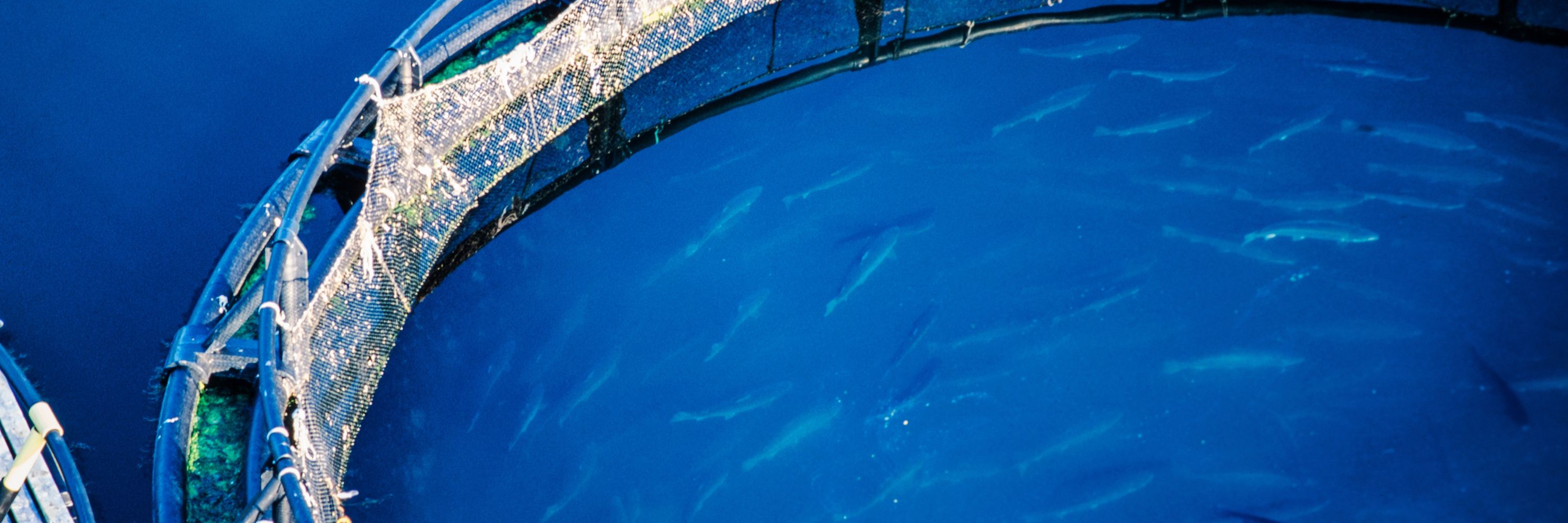
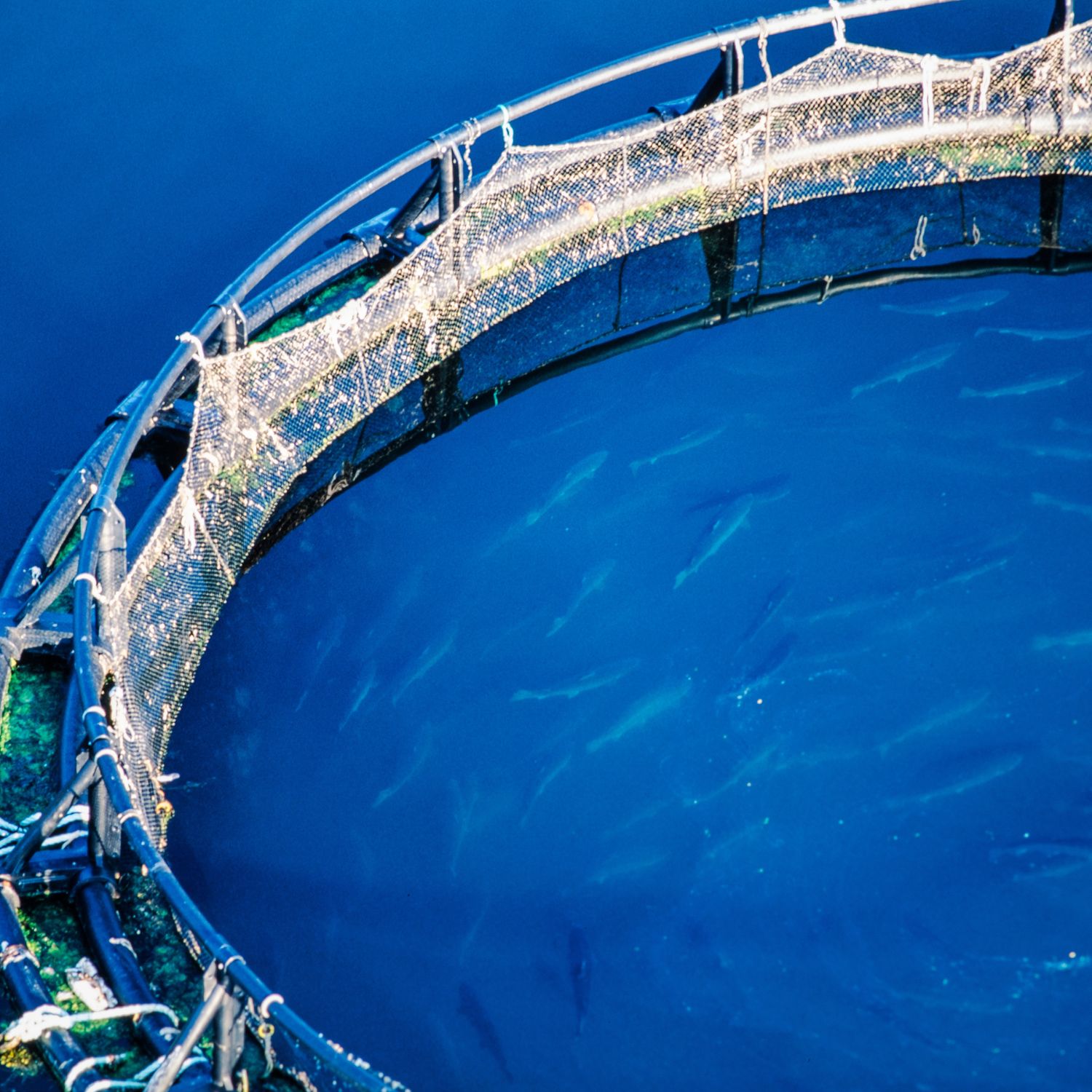
New data from Animal Equality reveals 48 tonnes of a formaldehyde was discharged into Scottish lochs in 2025, as environmental non-compliances by Scottish salmon farms rose by 243%, yet the animal welfare regulator insists the industry is “incredibly compliant”.
47 tonnes of carcinogenic formaldehyde poured into Scottish lochs in 2025
Over 48,000kg of formaldehyde – a chemical classified by the International Agency for Research on Cancer as a Group 1 known human carcinogen – was discharged directly into Scottish lochs by salmon farms in 2025. That represents a 40% increase on 2024, and is part of a steep upward trend: in total, nearly 176,000kg of formaldehyde has entered Scottish waters from the salmon farming industry over the past five years.
The UK Government classified formaldehyde as a carcinogen back in 2016, yet its use in the salmon farming industry remains permitted. The surge was particularly sharp last autumn: September 2025 saw the highest monthly use on record – double that of September 2024, and more than five times the level recorded in September 2023.
Norwegian-owned salmon farming giant Mowi accounted for 84% of all formaldehyde used last year. The company operates Loch Lochy, which was originally licensed for 120kg of formaldehyde per year in 2009. It now regularly exceeds that annual limit within a single week, and has discharged over 50,000kg into the loch in the last five years. Mowi’s two farms on Loch Awe – converted from trout to salmon in 2025 – used 15,000kg of the chemical in just four months.
These figures cover only farms discharging directly into lochs. Land-based facilities such as hatcheries, where formaldehyde is used in tanks before wastewater enters surrounding waters, are not included, meaning the true total is likely considerably higher.
Dr Shireen Kassam, consultant haematologist and Honorary Senior Lecturer at King’s College Hospital London, warned: “Formaldehyde is very toxic… Formaldehyde exposure is associated not only with long-term cancer risks but also with acute effects, including respiratory irritation, skin sensitisation, eye damage and exacerbation of asthma.” She added that repeated low-level exposure over extended periods could pose cumulative risks to workers.
Hundreds of regulatory breaches… and rising
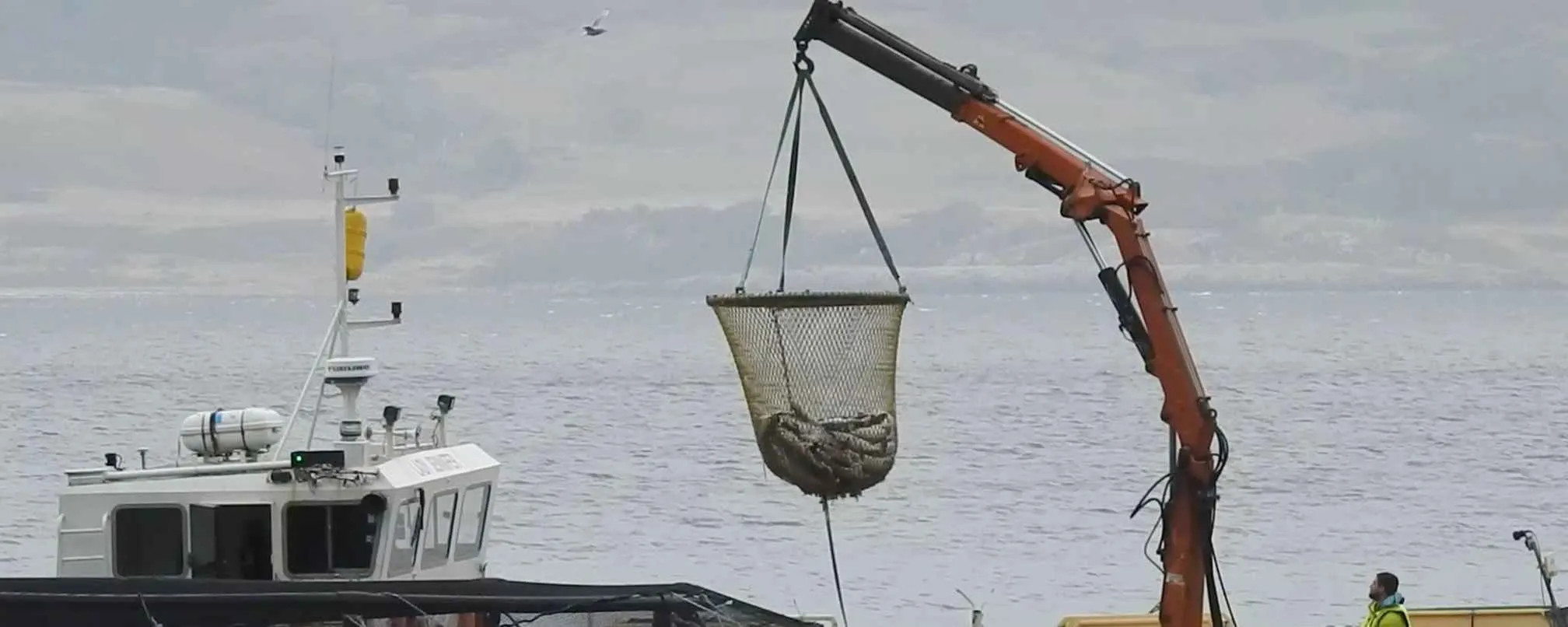
We also uncovered a broader pattern of escalating rule-breaking. Data obtained from the Scottish Environment Protection Agency (SEPA) shows that 103 non-compliances were recorded on Scottish fish farms in 2025 – a 243% increase on 2024, when 30 were recorded. Nearly half of last year’s non-compliances (47) were classified as major. Of all 143 sites found non-compliant over the past three years, three-quarters remain classified as non-compliant today.
The Fish Health Inspectorate (FHI), which oversees fish health and disease, tells a similar story. Across 158 farm visits in 2024, 68 cases of non-compliance were uncovered, the equivalent of 43 per every 100 visits. That rate has nearly doubled since 2021, when it stood at 22.3 per 100 visits, and has risen every single year since.
While the FHI described many of these failures as “administrative,” the reality is such breaches can include:
- Millions of fish deaths not reported on time
- Repeated failures to record fish movements
- Unrecorded movements of ‘cleanerfish’ – the animals used to eat the lice off the farmed salmon
- Inadequate medicine records
- Failures to report potential escape incidents, including holes in nets
The phrase “inadequately maintained” appears 186 times in FHI inspection reports since 2020.
Calls for a pause on expansion grow louder
Abigail Penny, Executive Director of Animal Equality UK, said:
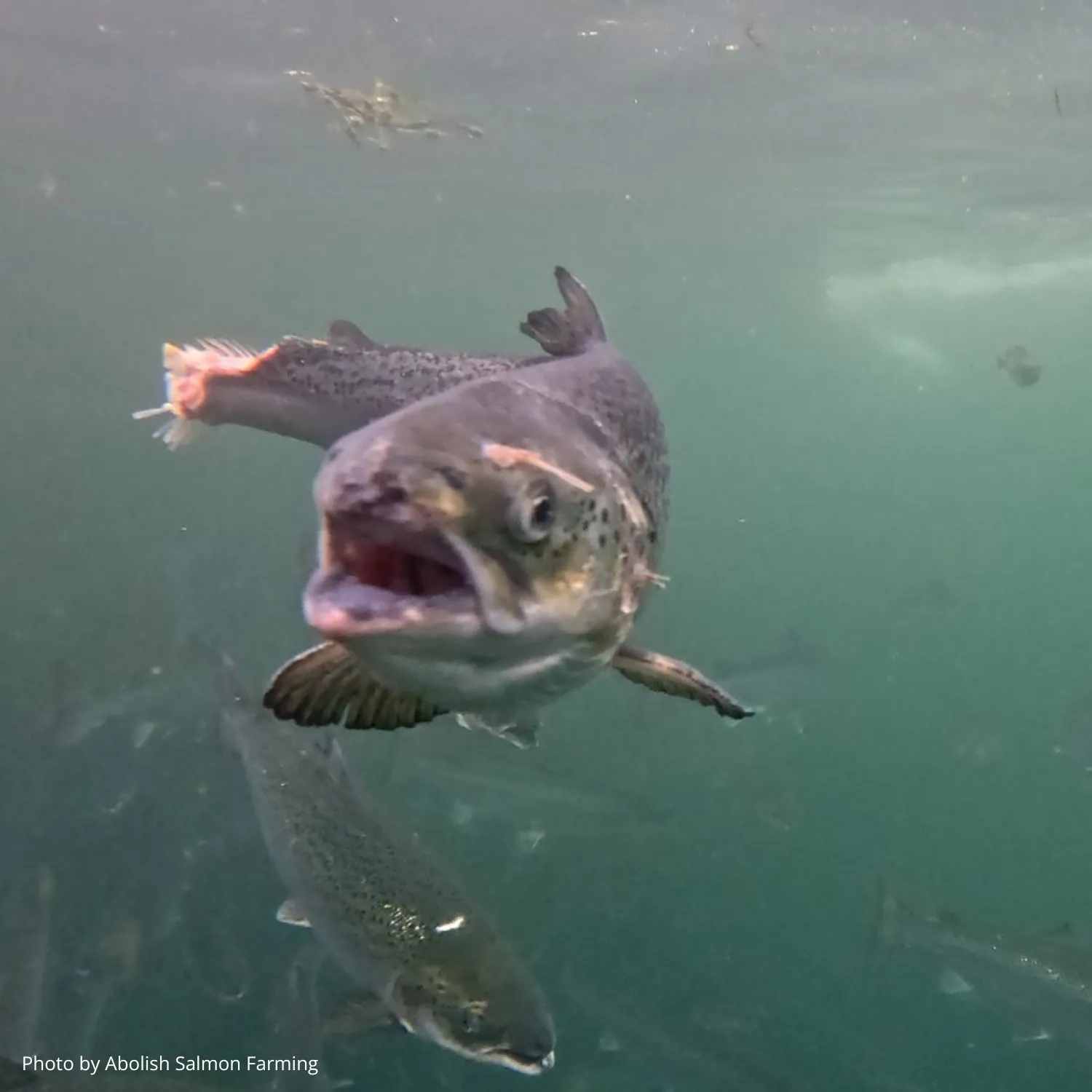
The salmon farming industry loves to present itself as a well-regulated success story, but that is all it is: a story. In 2025, a year when the world was closely watching — non-compliances recorded by the environmental regulator rose by over 243%, nearly one breach for every two farm visits by the disease regulator uncovered rule-breaking, and 12 million fish died. These are not the hallmarks of a well-run industry, but one that is being allowed to run riot.
The Scottish Government’s Rural Affairs and Islands Committee published a report in early 2025 questioning the “long-term viability” of the salmon industry after a nine-month inquiry. Its 12-month assessment now arrives against a backdrop of 12 million fish deaths in 2025, 1,200 breaches of the industry’s own sea lice Code of Good Practice, 66% underreporting of antibiotic usage, and workers raising concerns about hundreds of health and safety incidents – including fractures, broken bones, and at least one fatality.
Calls for a pause on industry expansion are mounting from local businesses, community representatives, conservationists, animal advocates, aquatic scientists, and economists alike. The system is broken; further expansion will only condemn millions more animals to irreversible suffering and harm.

Thank you so much for signing the petition. Small actions like this add up and change the world!
Farmed fish are often forgotten, but you can lend your voice to speak up for them. Please help by sharing this petition with your friends and social media followers.
Thank you again for your support – it will make a huge difference for animals.
Our brave investigators work incredibly hard to expose animal abuse so that, together, we can end it. Make a donation today to help keep them in the field.
Take a stand to help fish. Sign now!
Protect Fish
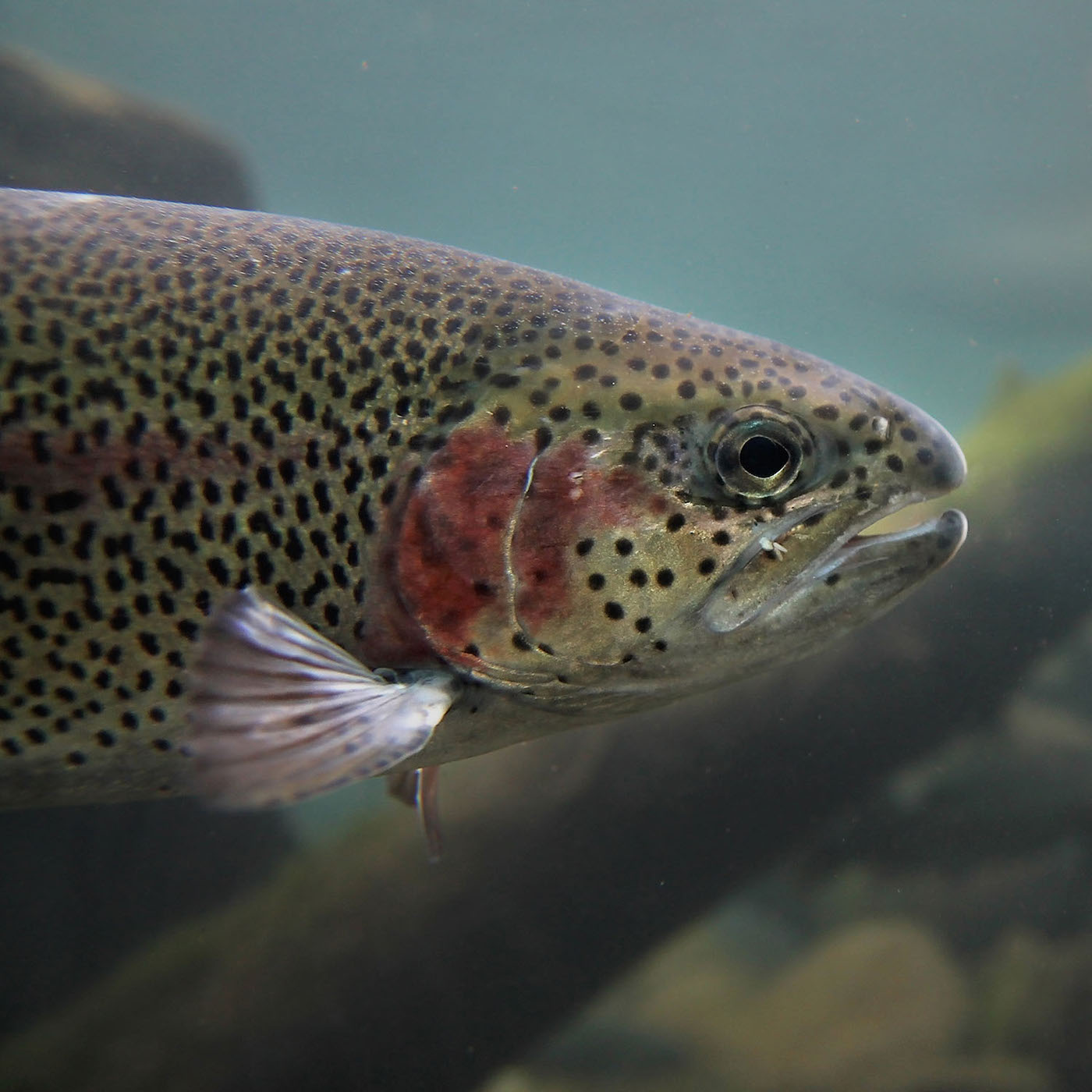
Scientists confirm that fish feel pain and suffer. Protect these sensitive beings by choosing plant-based alternatives to animal food products.