UK Government publishes landmark Animal Welfare Strategy
Today, the Government published the long-awaited Animal Welfare Strategy for England – a landmark plan that, once implemented, will have a direct impact on the lives of millions of farmed animals. The Strategy sets out commitments to eliminate some of the most egregious practices taking place on farms and at slaughter.
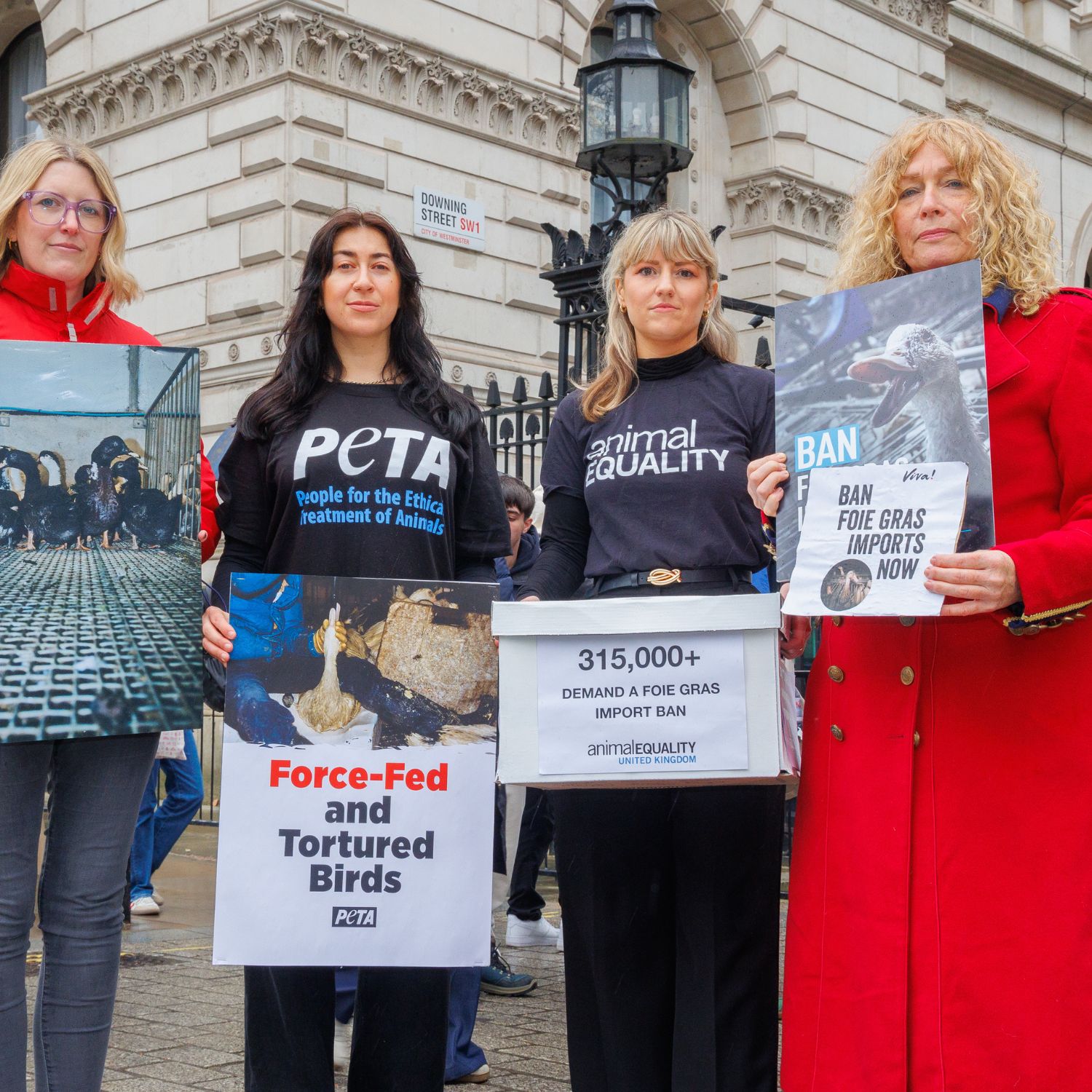
Animal Equality is immensely proud to have been involved in shaping this critical set of promised reforms – from carrying out powerful campaign actions, to taking part in invite-only Ministerial roundtables, and collaborating closely with fellow NGOs and experts. We are delighted with this Strategy and commend Ministers for their work on developing it.
Now the hard part begins and we must ensure that these promises become policies! We will be providing consultation and support to policy-makers over the coming years to make sure these promises result in meaningful, robust, and enforceable outcomes for the animals who need it the most.

A ban on cages for hens
For hens used for their eggs, the Strategy promises to consult on moving away from ‘enriched colony cages’, systems that severely restrict movement and prevent hens from performing many of their natural behaviours like perching, dust bathing, and fully stretching their wings.
It also highlights plans to tackle the widespread practice of debeaking, which is used to prevent feather pecking (which hens carry out due to the stressful environment) but causes lasting pain and distress.
Over the years, Animal Equality has released extensive footage from inside egg farms, revealing the extreme stress that such confinement causes the birds. Hens are crammed into tight wire cages and often lose their feathers from the stressful conditions – around seven million spend their lives in cruel cages, exploited for their eggs, before they are eventually taken to slaughter.
A ban on cages for mother pigs
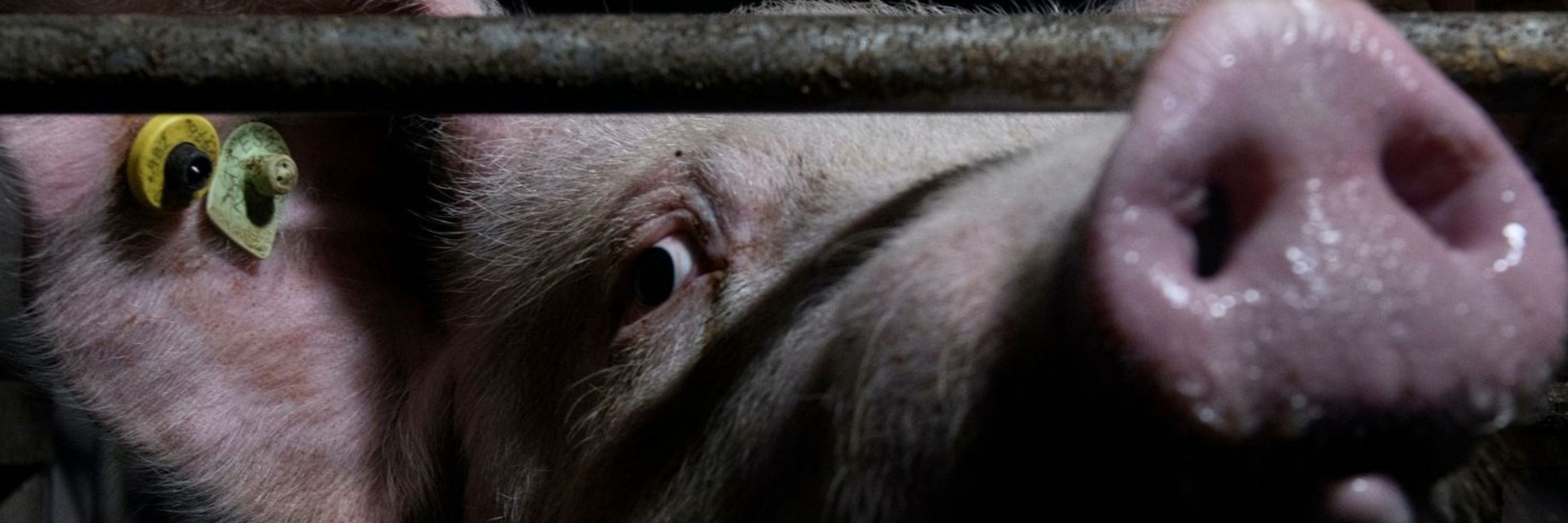
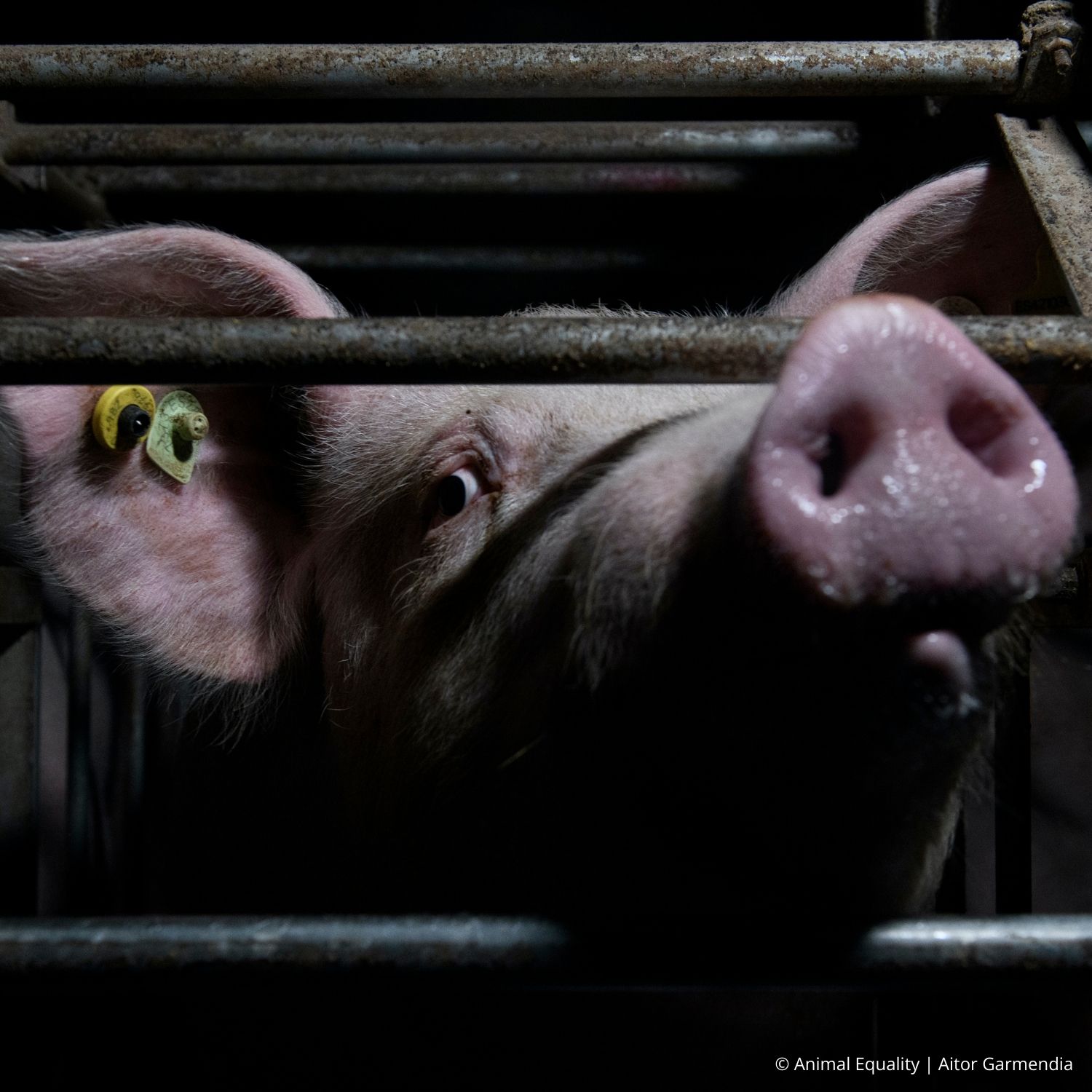
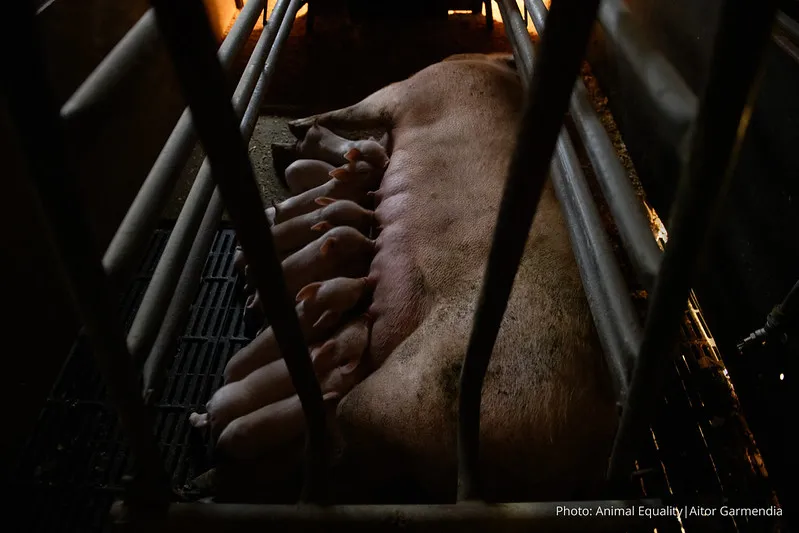
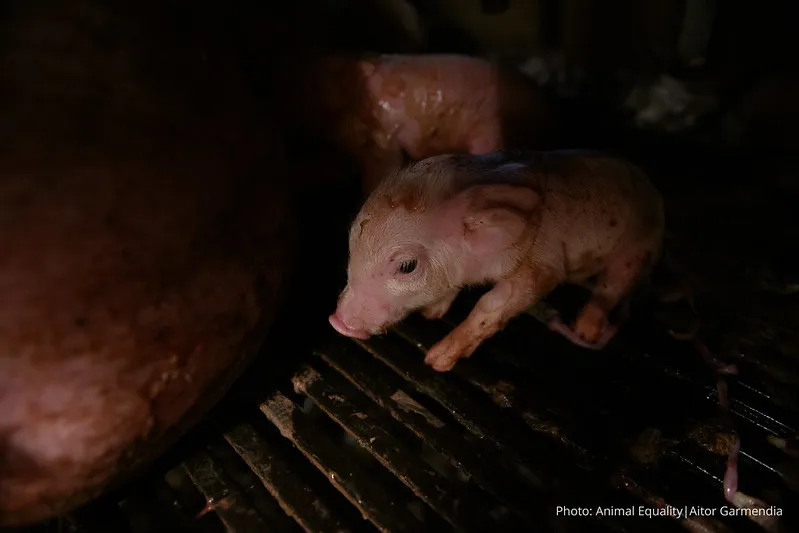
The Strategy also commits to consulting on the transition away from ‘farrowing crates’ for mother pigs – narrow metal cages that confine pigs so tightly that many cannot even turn around during one of the most vulnerable periods of their lives. We will be working hard to ensure this results in a total cage ban, not a move to so-called ‘flexible’ cages, where the pigs will still remain partially confined.
Most recently, Animal Equality gathered 120 hours of footage from inside a British pig farm, filming and analysing the behaviour of three mother pigs kept in ‘farrowing crates’. We produced a comprehensive expert-led report and discovered the animals spent over 90% of their time lying or sitting down, barely engaging with the ‘enrichment’ provided (a wooden block or plastic stick), and biting the bars in frustration. One expert described that the pigs were likely to experience PTSD from the extreme confinement. We were invited to present our report in English and Scottish Parliaments, ensuring these animals’ stories were amplified and seen by some of the most senior decision-makers in Government.
A shift away from ‘faster-growing’ chickens and male chick killing
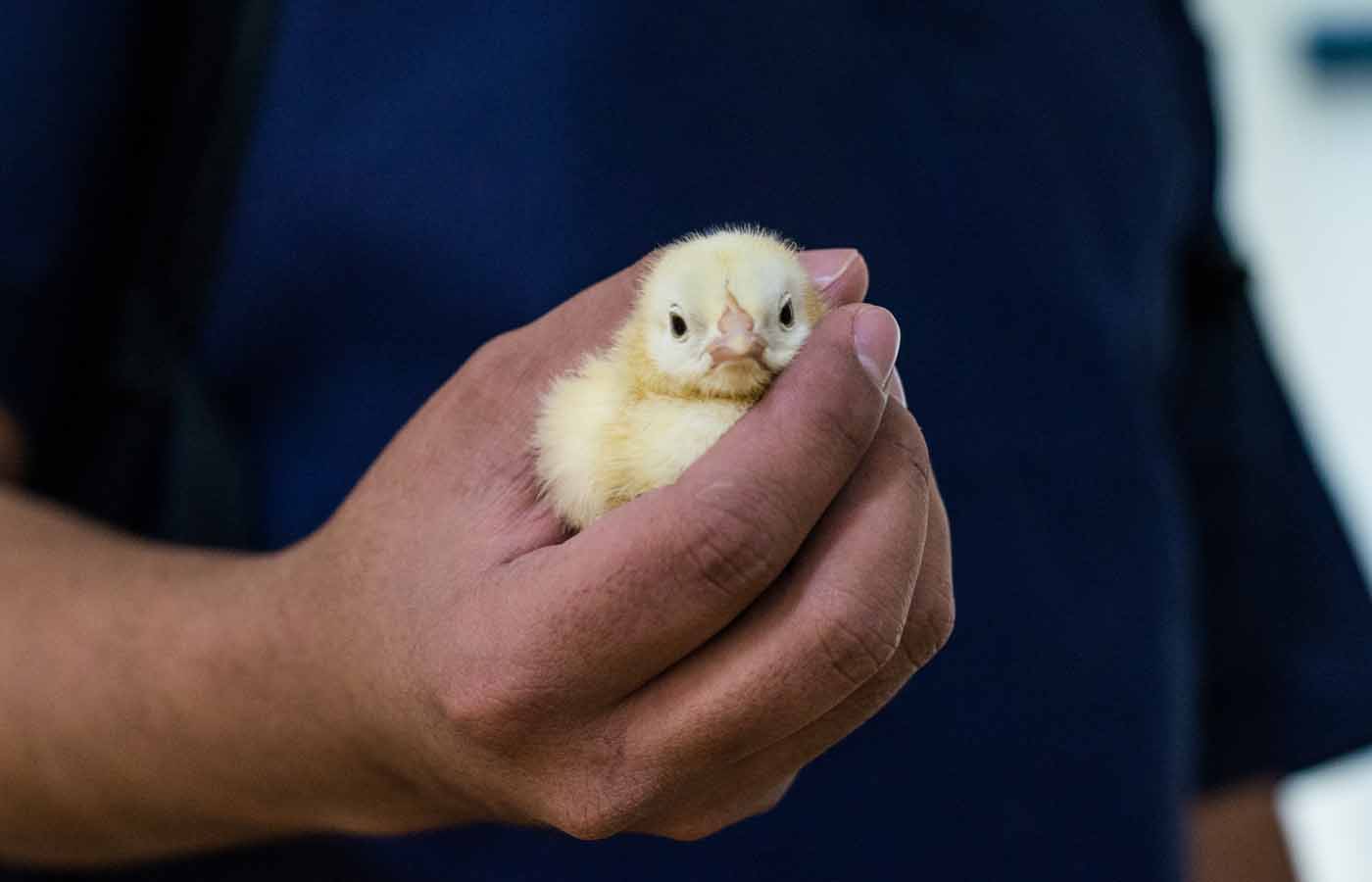
The Strategy also supports a move away from ‘faster-growing’ chickens who are bred to grow far too big, far too quickly, and can suffer from heart attacks and broken legs as a result. The Strategy also signals the Government’s intention to move away from current industry practices that involve male chick culling, a routine procedure where millions of day-old male chicks are cruelly killed each year by the egg industry simply because they do not lay eggs.
Animal Equality exposés have revealed time and again the severe consequences of ‘faster-growing’ breeds of chickens – animals who have been selectively bred to grow as large as possible, so the industry has more meat to sell and more money to make. Millions become lame, suffer from leg or lung deformities, and struggle to stand due to their unnaturally large weight.
Phasing out CO2 stunning of pigs
Animal welfare at slaughter is another key focus. The Strategy commits to ending high-concentration carbon dioxide stunning for pigs, which causes acid to form in the pigs’ eyes, nose, and throat, resulting in agonising distress and pain for nine million pigs each year.
Earlier this year, Animal Equality commissioned a paper from Jenny Mace and Veterinary Professor Andrew Knight, to discover the welfare impacts of high-intensity carbon dioxide stunning of pigs. The paper – published in a world-leading veterinary journal – evidenced that acid forms on the pigs’ eyes, noses, and lungs, and the animals show signs of breathlessness, panic, and pain. They determined that this is an unacceptable stunning method and must be banned immediately.
Introducing slaughter protections for farmed fish
For farmed fish, the UK Government has pledged to introduce slaughter requirements for the first time in law, aiming to spare them ‘avoidable suffering’.
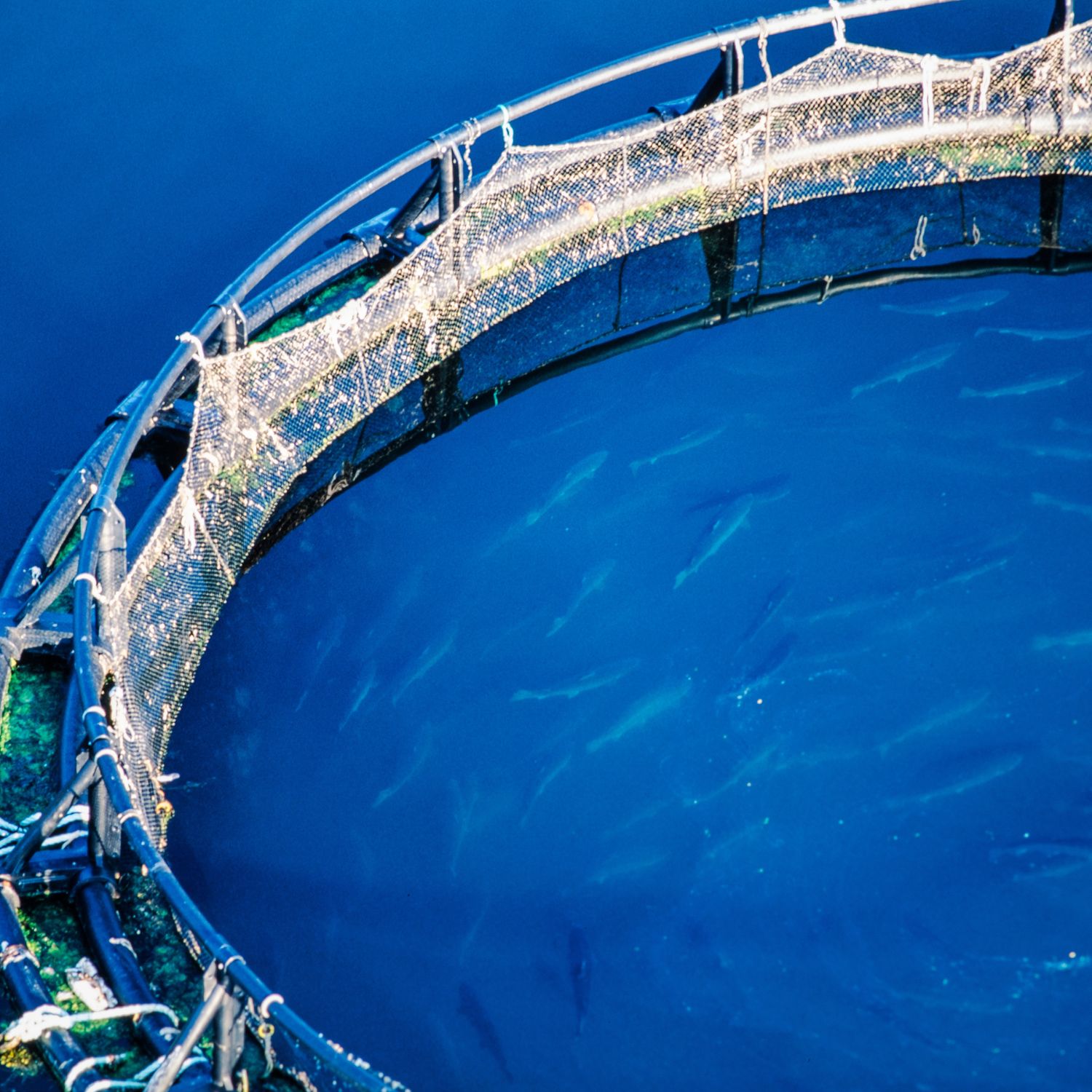
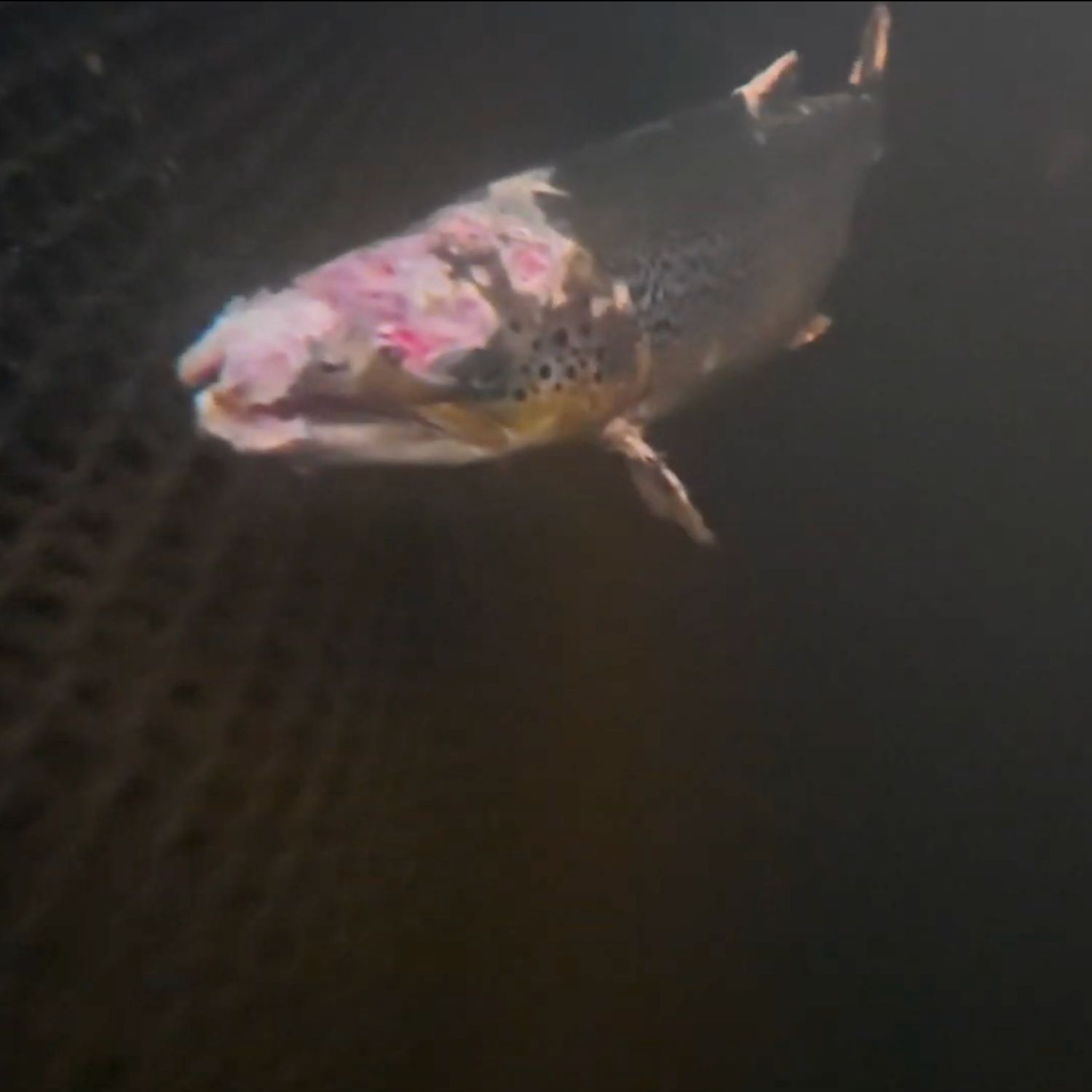
Animal Equality has been calling for species-specific legislation to be introduced for farmed fish at the time of killing for many years. We have released hard-hitting investigations showing fish suffocating to death, being bludgeoned and trodden on, and being cut while conscious. We have submitted detailed responses to consultations, presented in the Houses of Parliament, and gathered support from over 70 experts in the field.
The linchpin: strong enforcement
The real test will be in implementation.
The Strategy outlines plans for consultation, realistic timelines, and enforcement measures. Starting in 2026, the Government will begin tracking and publishing data on breaches of animal welfare law in farming, providing much-needed transparency on whether protections are being upheld.
For decades, Animal Equality has revealed the Enforcement Problem on farms – whereby laws exist on paper, but not in practice. We have shown piglets routinely having their tails cut off, cows suffering from lameness, animals with untreated injuries and wounds, with others suffering agonising and unnecessary pain. We have released and commissioned a series of reports on the matter, presenting them in the House of Parliament and House of Lords, and earlier this year Government advisory body – the Animal Sentience Committee – endorsed our ask: that all farms be licensed. As a result, they will be subject to more scrutiny, more inspections, and more penalties when non-compliances are discovered.
This strategy represents a turning point for animals and sets a clear course toward ending some of the worst abuses suffered by millions of animals every year. Farmed animals, on land and in water, are among the most neglected on the planet, so it’s encouraging to see their plight finally brought to the fore. Right now, mother pigs nurse their babies from behind metal bars; hens cannot spread their wings; farmed fish can slowly suffocate; pigs face agonising deaths; and chickens’ legs snap under the weight of bodies bred to grow too fast. The Government, like the British public, knows that such extreme suffering is unacceptable and that it’s time to act. The Government must now translate these ambitions into law and ensure the impact is felt on every farm, by every animal. My team and I stand ready to support and ensure that these promises become a reality – animals cannot wait a moment longer.
-Abigail Penny, Executive Director of Animal Equality UK
Help animals today and every day
While we must help the animals trapped in the current system, we can save them from a lifetime of suffering today and every day simply by enjoying a plant-based diet.
Try some delicious free recipes from our cookbook today and help animals with every bite!
PRESERVE FAMILIES
A curious chick recognises his mother’s voice and imprints on her immediately after hatching. You can defend these family bonds by choosing plant-based alternatives to eggs.