The Olympic Games start tonight: the opening ceremony marks suffering for ducks and geese, but our fight for them will never stop!
Our campaign to eliminate foie gras from the Olympics
After discovering that foie gras would be served on the VIP menu of the Games, Animal Equality’s President personally reached out to the Paris 2024 organising committees, but we were met with silence.
So, we wrote a second letter to the Olympic organisers, this time signed by dozens of high-profile Olympic medalists, academics, veterinarians, and fellow NGOs.
Finally, the Committee replied, but only to absolve themselves of responsibility and shift the blame.
Advocates sent over 15,000 emails to the organisers and pleaded on social media, urging the Games’ hospitality chefs to publicly denounce foie gras and support our campaign.
More than 70,000 people signed our global petition, showing that the international community will not tolerate animal abuse. We flew to Paris to deliver them directly to the Olympic Committee and to make it clear that the spectators of the games would not stand by in the face of animal suffering!
But Olympic organisers prioritised this unnecessary, supposed ‘luxury’ dish for their highest-paying guests.
Why is foie gras produced through force-feeding cruel?
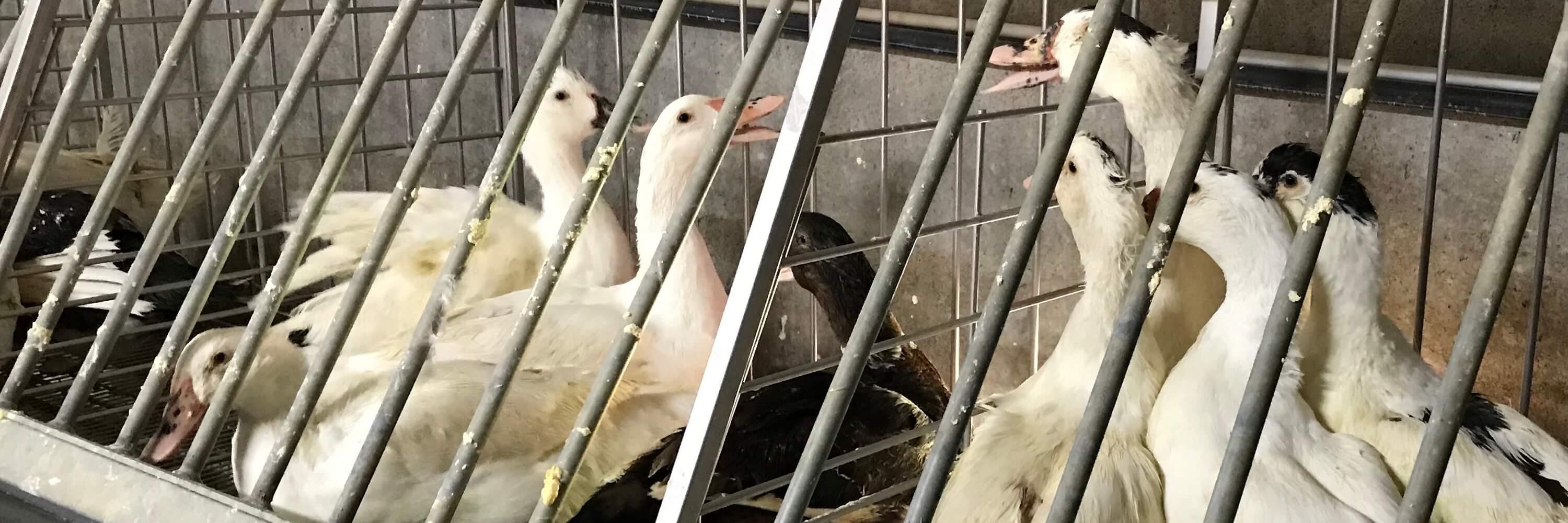
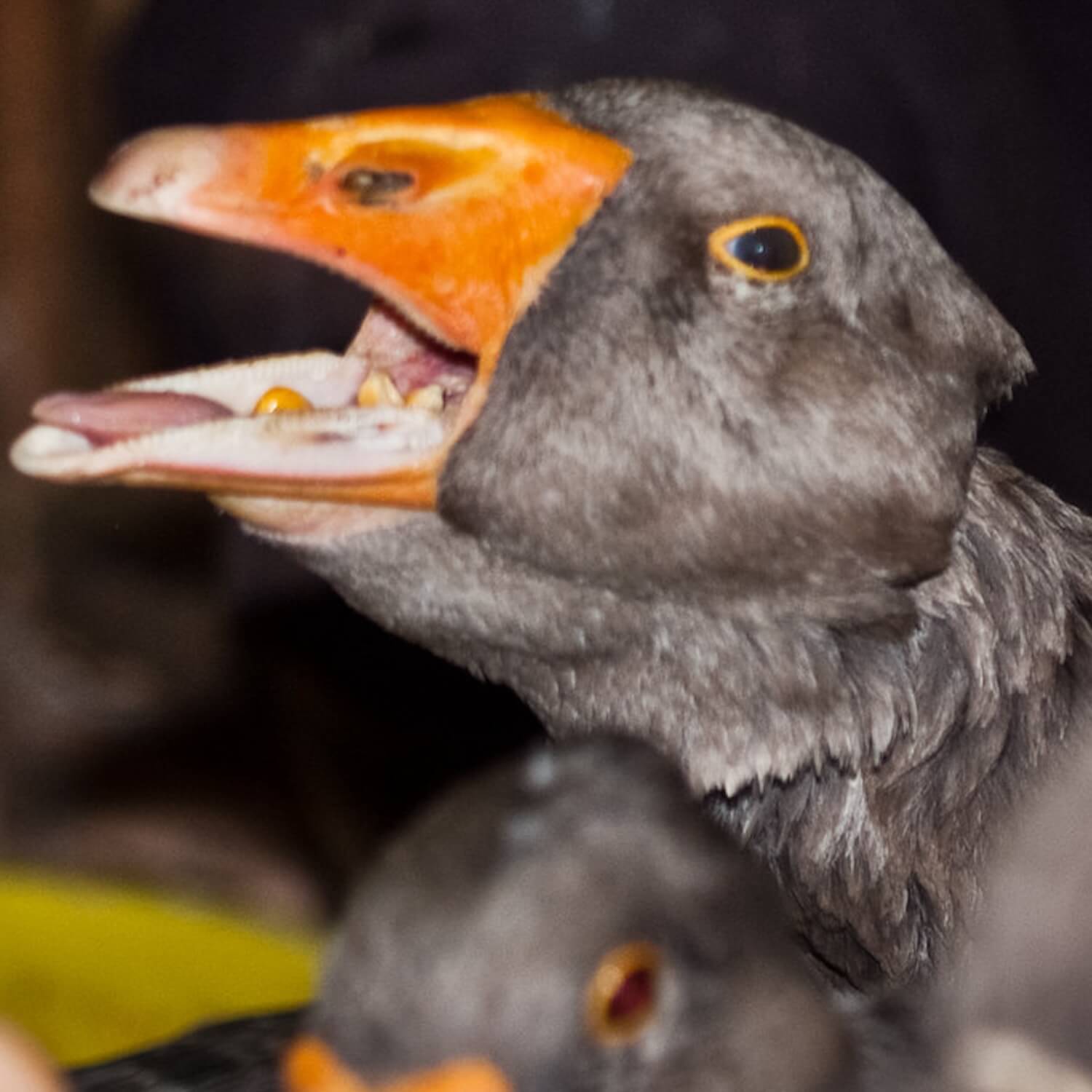
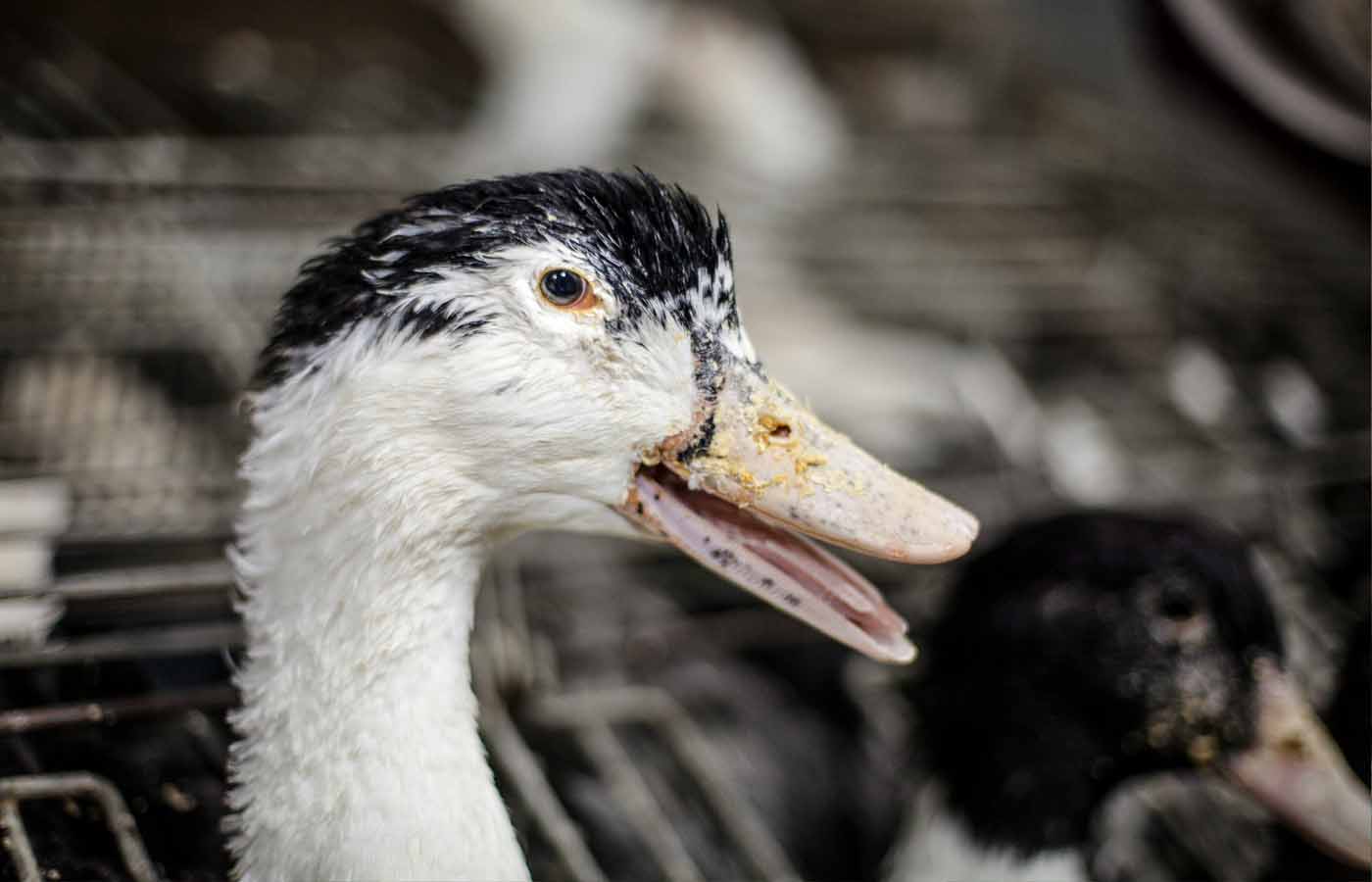
Force-feeding is a practice that consists of thrusting a long metal tube down the throats of ducks and geese, forcing them to swallow huge quantities of food. It is a practice that causes extreme physical and psychological pain, and has been denounced for years by world-leading academics.
Ducks used for foie gras are force-fed up to 45 times throughout their lives, while geese can be force-fed up to 63 times. Once their livers become diseased from this process, the animals are slaughtered.
Condemned by many, the force-feeding of animals has been widely criticised for decades and is a crime to carry out in many countries, including Italy, Austria, Croatia, the Czech Republic, Denmark, Finland, Germany, Luxembourg, Norway, Poland, and the United Kingdom.
Help us stop the cruelty of the foie gras industry
Our battle against the cruel practice of force-feeding continues.
Our work against foie gras production has already led to significant results:
- In 2014, thanks to Animal Equality advocates, foie gras imports were banned in India;
- In Italy, we persuaded 44 Italian parliamentarians to support an EU-wide ban on force-feeding;
- In the UK, we led a Member of Parliament to speak out in support of Animal Equality’s campaign to ban foie gras imports during a Westminster debate, and secured a pledge from the Labour Party.
We need your help to make further progress for ducks and geese. Will you stand by our side?
END THE CRUELTY
Foie gras is immensely cruel. Its production causes ducks and geese severe physical and psychological pain. You can protect ducks and geese by opting for plant-based alternatives.