

Chickens That Can’t Walk and Corpses Among Live Animals: An Investigation into Argentine Farms
A new investigation by Animal Equality, narrated by Argentine artist Nicolás Pauls, exposes the conditions under which chickens raised for the meat industry in Argentina are exploited. The evidence documents animals unable to walk, corpses abandoned among live animals, and birds with damaged plumage, reflecting the consequences of one of the most intensive models of animal exploitation.
The evidence was gathered on three farms located in the provinces of Buenos Aires and Entre Ríos.
Watch the investigation narrated by Nicolás Pauls
What did we document on Argentina’s chicken farms?
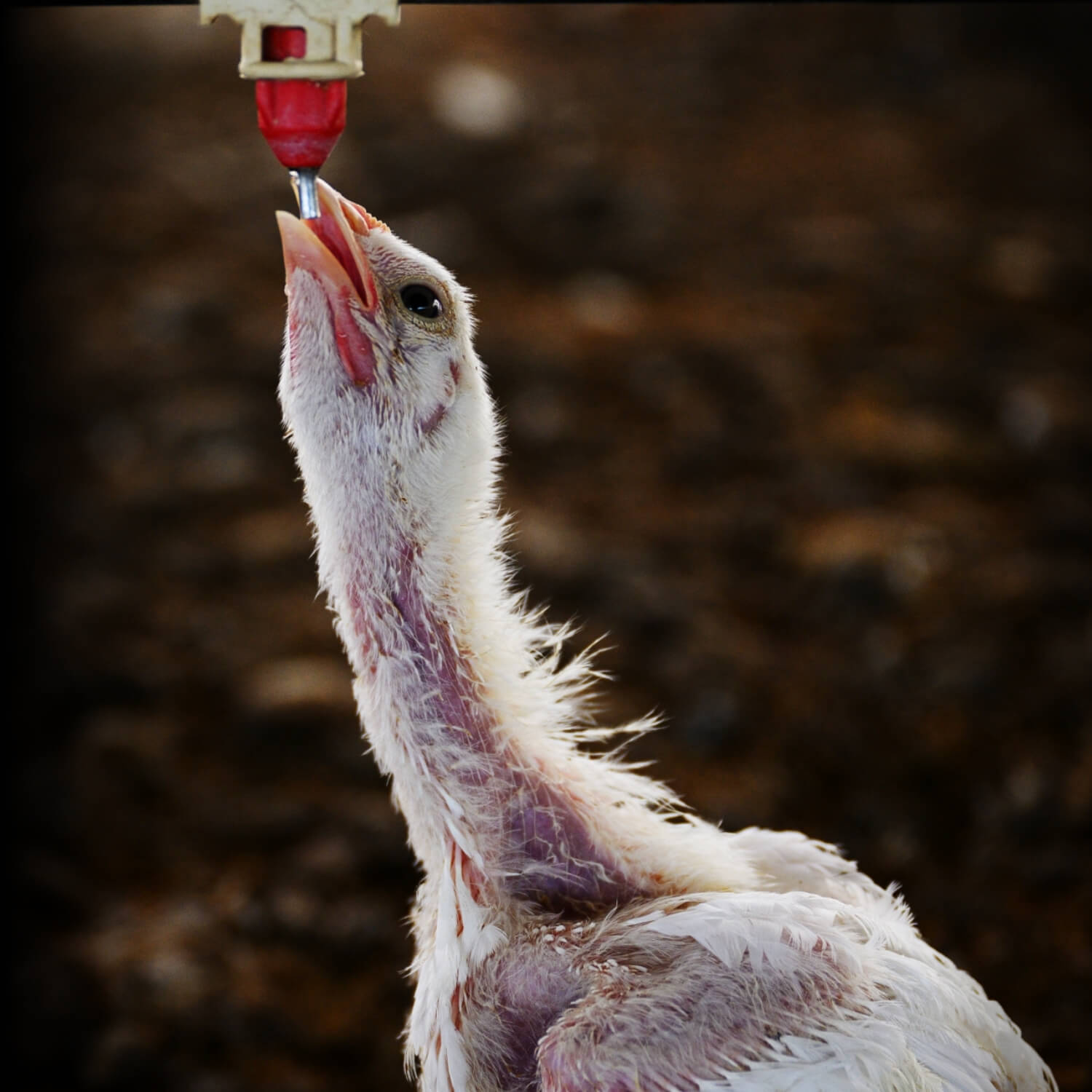
The footage shows chickens with severe mobility problems, their legs splayed completely apart as they try to push themselves up with their wings to reach the water. Animals that hadn’t grown as quickly as the rest were also documented, struggling to access the drinkers.
The investigation further shows the presence of corpses next to drinkers and feeders, as well as among live animals, a situation that increases the risk of disease and infection within the production sheds.
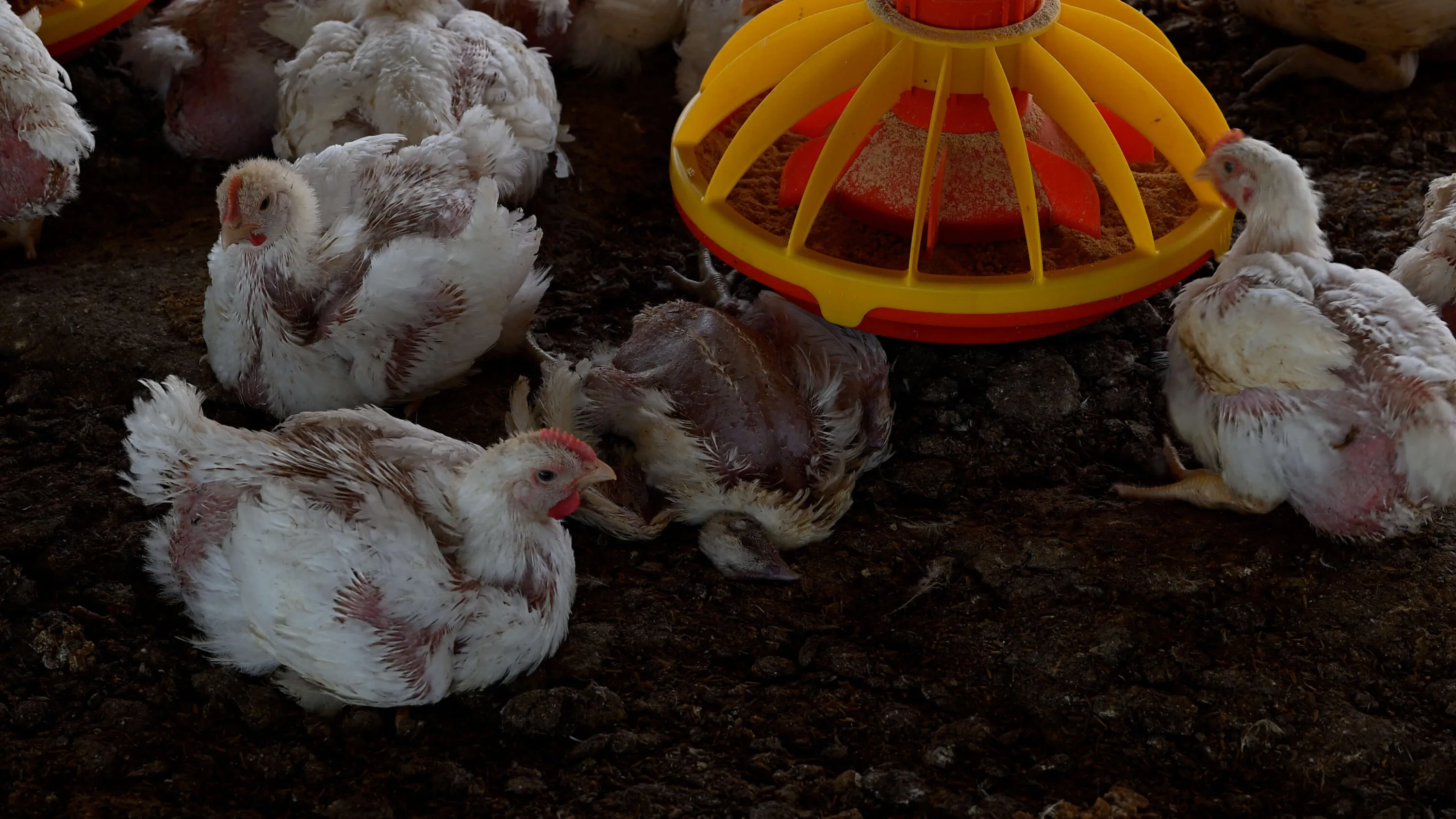
Likewise, numerous chickens show feather loss, burns, and skin lesions caused by constant contact with urine and excrement, an indicator of low levels of animal welfare.
The cruelty behind accelerated growth
For decades, the industry has bred chickens to grow as fast and as large as possible in the shortest time – a model designed to maximise economic profit at the cost of animal suffering. According to the technical assessment carried out for this investigation, the main problems observed are linked to the selective breeding of fast-growing chickens and to the confinement inherent to industrial production.
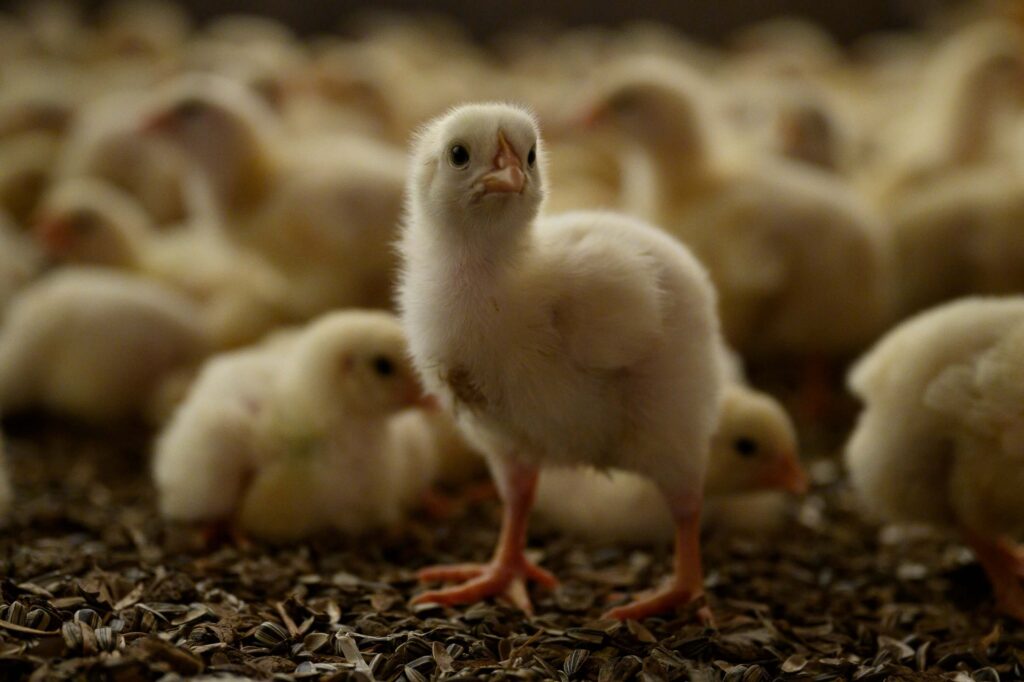
A chick is born weighing barely 44 grams, and by 42 days of age (the average age at which they are slaughtered), they weigh around 3.2 kilos – more than 70 times its birth weight. This growth rate is more likely to result in bone deformities, lameness, and cardiovascular problems, and makes it difficult for many animals to walk or reach food and water. Even in their final week of life, a ‘fast-growing’ chicken continues gaining more than 100 grams a day, a pace that their own skeleton and cardiovascular system cannot withstand.
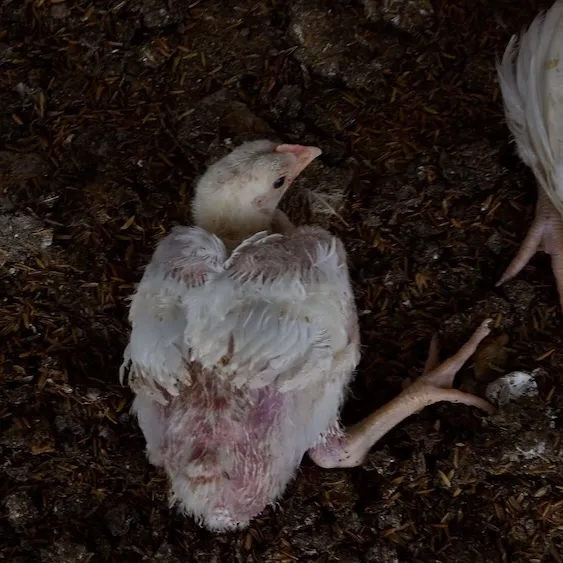
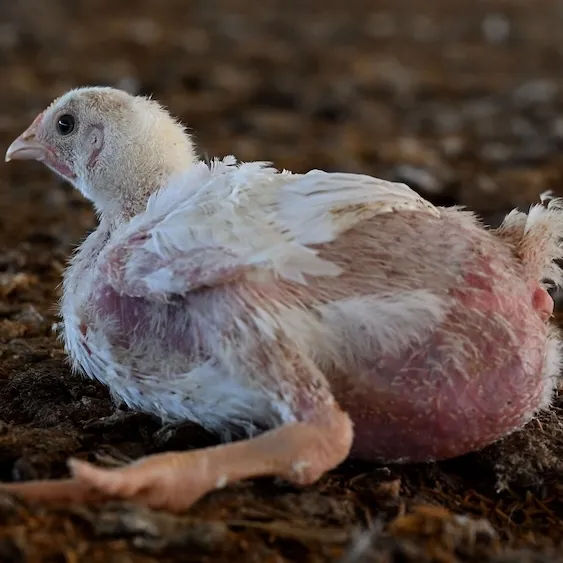
The harm caused by this unnatural growth has been scientifically confirmed and has led countries like Norway to ban the raising of fast-growing breeds. Researchers have noted that rapid growth disrupts the original balance of tissue growth and development in chickens exploited for their meat, and that the fast weight gain combined with delayed skeletal development leads to skeletal diseases in broilers, particularly in the leg bones.
An inspection that didn’t get to the bottom of it
As in previous investigations, Animal Equality filed a complaint with the National Agri-Food Health and Quality Service (SENASA) regarding the facts documented at each of the farms, so that they would be investigated and the necessary measures taken.
Regarding one of them, located in Entre Ríos, the agency determined that, following a visit by a local veterinarian, the farming there was carried out under acceptable conditions in accordance with Resolution 1697/2019, and that no problems affecting the welfare of the chickens housed there had been observed.
However, based on an analysis of the documentation sent by SENASA – records, reports, and photographs from those visits – Animal Equality warns of serious limitations in the inspection procedure:
- No detailed study of the actual condition of the chickens was carried out.
- No detailed analysis of the environmental enrichment of the sheds was conducted.
- No photographs were taken of the animals themselves that would allow their condition to be verified.
“SENASA’s inspections are limited to reviewing whether the farm’s infrastructure meets their criteria, but they deliberately fail to assess the actual condition of the chickens being exploited. That is precisely what this investigation seeks to denounce and bring to light,” said Dulce Ramírez, Vice-President for Latin America at Animal Equality.
Given what has been deemed an insufficient and partial response, a new inspection has been requested that takes into account the actual condition of the chickens.
An industry growing at the cost of animal suffering
This investigation comes as intensive farming is expanding in Argentina. According to the National Agri-Food Health and Quality Service, more than 750 million birds were slaughtered for human consumption in the country in 2025.
Production is concentrated mainly in the provinces of Entre Ríos and Buenos Aires, while chicken meat consumption reaches 47.7 kilograms per person per year, according to official data from the National Secretariat of Agriculture, Livestock and Fisheries, updated as of 2025.
For this reason, more and more people are choosing a plant-based diet, and today, your choice can help change thousands of lives.
Browse Love Veg for delicious plant-based dishes with one essential ingredient in common: respect for all animals.
Protect chickens
Chickens are among the most abused land animals on the planet. But you hold the power to change this! Choose plant-based to protect chickens from a life of suffering.