Scottish salmon company misled regulators twice over abandoned fish in diseased cages
One of Scotland’s largest salmon farming companies twice provided false information to regulators after abandoning live fish on a farm it had officially declared empty, according to newly released Freedom of Information documents, private correspondence and undercover footage published by Animal Equality UK.
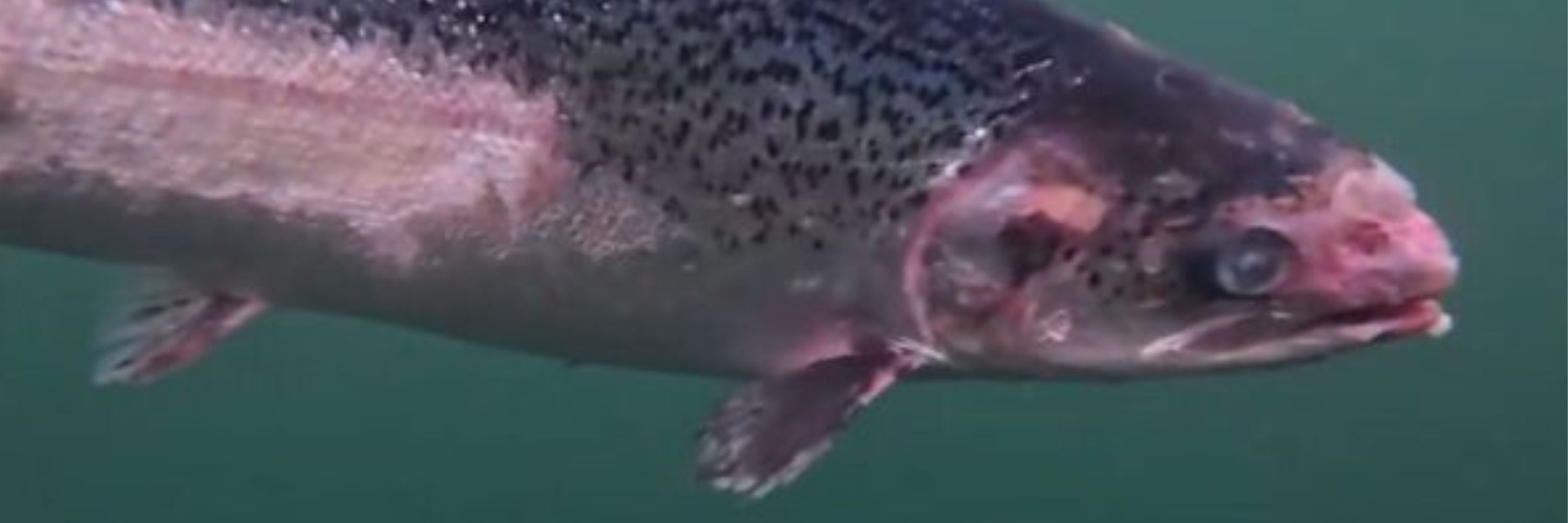
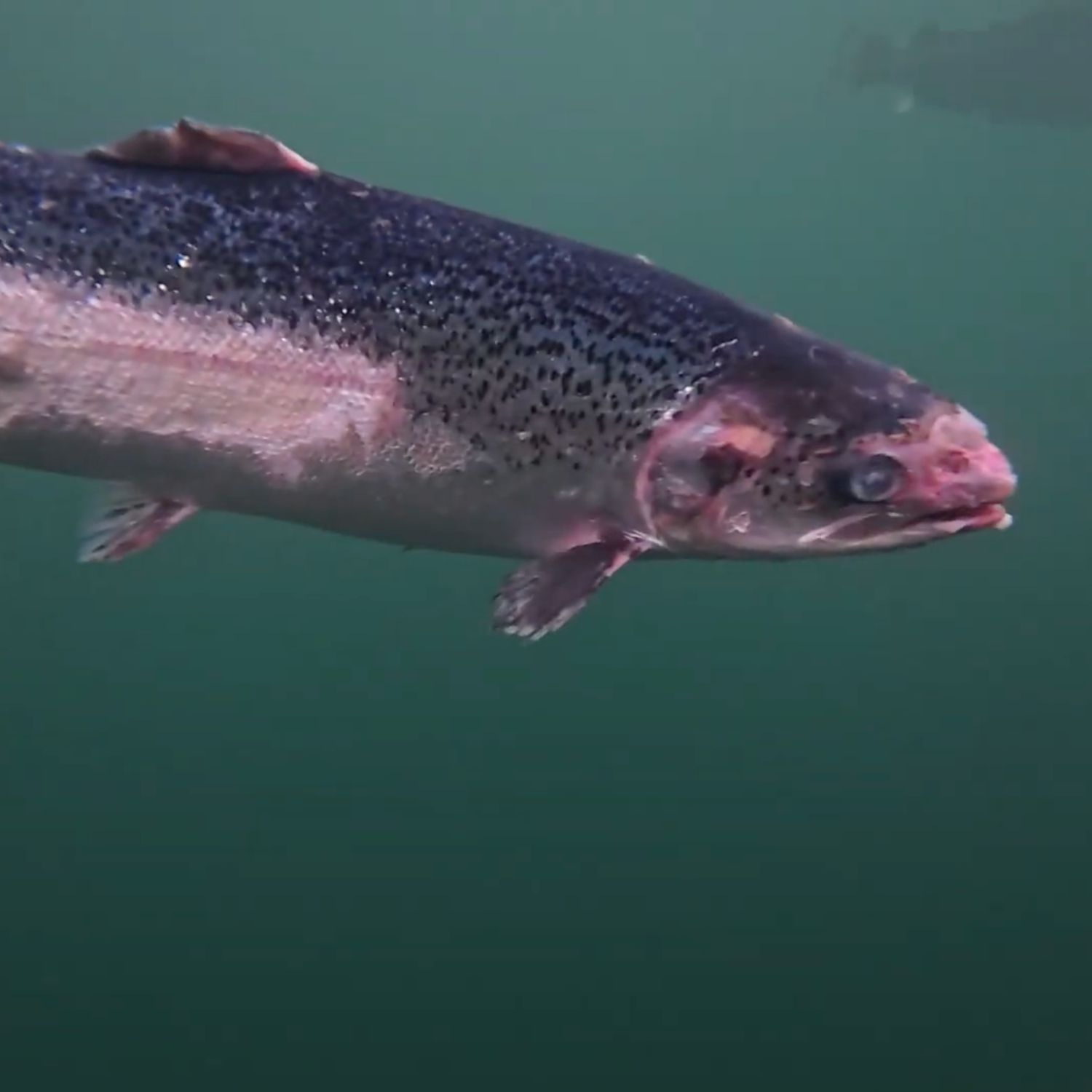
The investigation centred on Bakkafrost’s Loch Aird Ardheslaig salmon farm, where members of the public reported severely diseased fish months after the company had declared the site “fallow” – a legally required period during which salmon farms must remain empty to help prevent the spread of disease and parasites.
A fallow period is one of the industry’s most important biosecurity measures, allowing sea lice and infectious diseases to die out before new fish are introduced and confined in the sea cages. Falsely declaring a site empty undermines both legal requirements and protections for farmed fish and vulnerable wild Atlantic salmon, whose populations have now fallen to record lows.
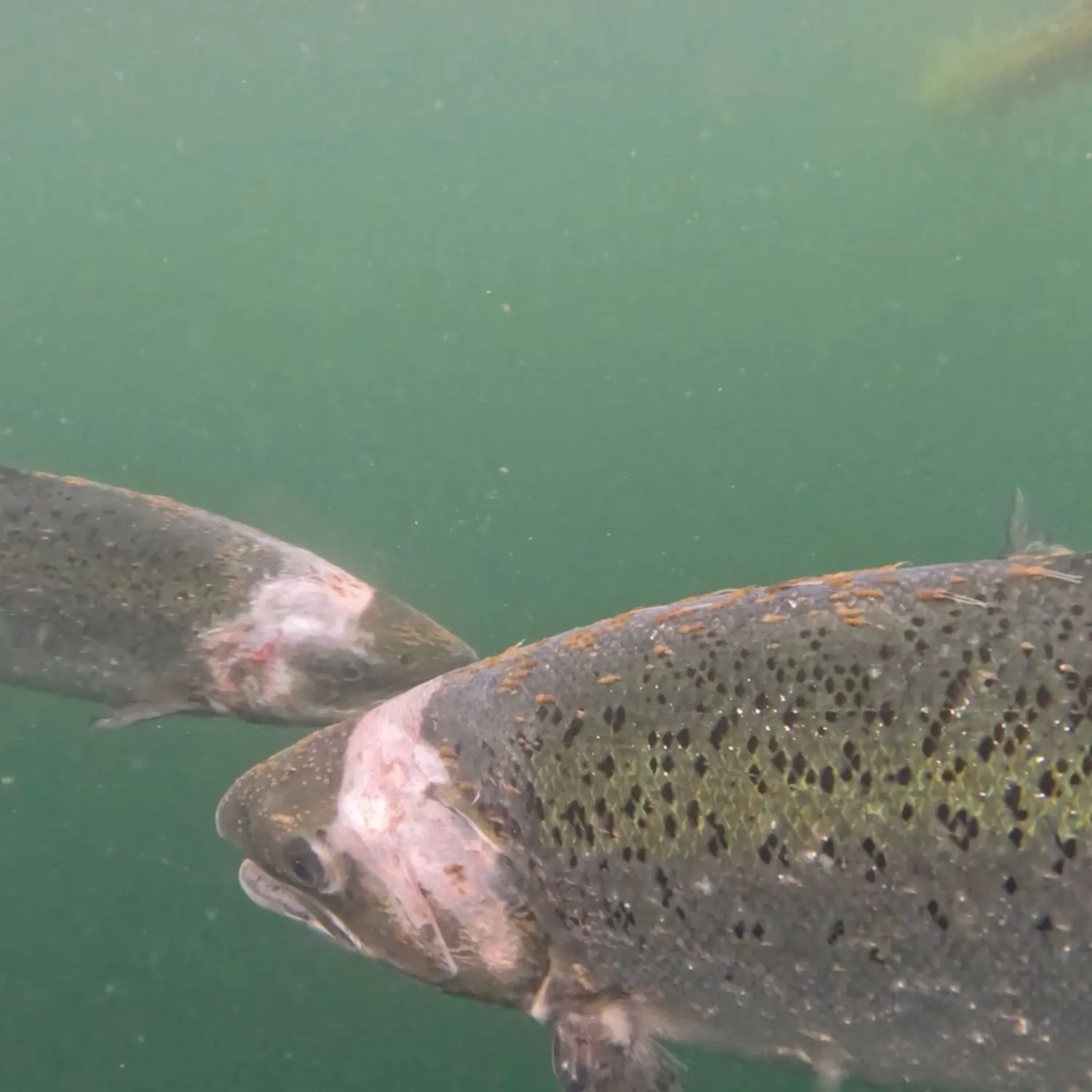
When a member of the public alerted authorities in July 2025 after observing salmon with their “whole face area eaten or fungus all over them” alongside dead fish “floating and rotting,” Bakkafrost subsequently informed both the Fish Health Inspectorate (FHI) and Animal and Plant Health Agency (APHA) that only five fish had been found and subsequently killed.
However, covert footage obtained by Animal Equality UK tells a different story.
Investigators filmed workers bludgeoning at least 24 live salmon to death from a single sea cage, contradicting the company’s account to regulators and raising fresh questions about whether authorities were misled over the true scale of the incident.
Adjusting public records
Following the investigation, the Fish Health Inspectorate retrospectively amended publicly available Scottish Government records. Reports that had originally classified the site as “fallow” were changed to “withdrawal period prior to harvesting” after the fact, which obscures what actually happened and weakens public confidence in regulatory oversight. The fish were not “harvested” for human consumption, to our understanding, so we believe that this updated record is inaccurate.
Abigail Penny, Executive Director of Animal Equality UK, said:
Bakkafrost provided false information to regulators in relation to this incident – not once, but twice. Whether that’s down to incompetence or deliberate deception, neither is reassuring.
Conflicting Statements
Responding to a written parliamentary question on 20th March 2026, then Cabinet Secretary Mairi Gougeon stated that the Fish Health Inspectorate was “not aware of other incidents of non-reporting of sea lice counts where sites have been incorrectly declared fallow while fish are still held on site.”
However, we have since identified at least two further examples.
At Grey Horse Channel Outer in 2022, an APHA inspection uncovered salmon remaining inside a site declared fallow more than five weeks earlier. According to inspection records obtained by Animal Equality UK, the fish had been left without food or care for 37 days before being killed. No weekly sea lice counts were recorded during this period despite legal reporting requirements.
Emails obtained through Freedom of Information legislation indicate that both the Fish Health Inspectorate and the Scottish Environment Protection Agency (SEPA) now say they are unaware of the incident, despite internal correspondence showing the FHI alerted SEPA to it in 2022.
A second case concerns Bakkafrost’s Ardcastle farm.
On 29th January 2025, footage showed salmon still swimming inside cages 40 days after the farm had officially entered its fallow period. Four days after the footage was published, Bakkafrost informed SEPA that fish had been discovered after the company had believed the site was completely empty. Again, no sea lice counts had been reported during the period the fish remained alive, despite statutory reporting requirements.
A pattern of oversight
The Fish Health Inspectorate has a legal duty to carry out unannounced inspections, yet none were conducted during 2023 or throughout the first nine months of 2025. Only two unannounced inspections were recorded in 2024.
Meanwhile, compliance figures suggest increasing regulatory concerns. Of 158 farm inspections conducted in 2024, 68 resulted in findings of non-compliance-a rate of 43 non-compliant visits for every 100 inspections, almost double that recorded in 2021.
More than 12 million farmed salmon reportedly died on Scottish farms during 2025. Because mortality reporting remains voluntary and there is no legislation specifically governing on-farm mortality, regulators’ response was limited to reminding companies of their reporting obligations.
Environmental and animal welfare enforcement data
During 2025, SEPA recorded 103 environmental non-compliances across Scottish fish farms – a 243% increase on the previous year-with almost half classified as major breaches. Across a three-year period, nearly three-quarters of sites found to be non-compliant remained in breach.
One hatchery was suspended after exceeding permitted limits for formaldehyde – a chemical classified by the UK Government as a carcinogen-for 117 consecutive days.
Since 2022, APHA has received 57 third-party welfare complaints relating to Scottish salmon farms. Despite conducting 104 investigations since 2020, only two warning letters have been issued.
Animal Equality UK analysed publicly available data, and found widespread sea lice problems across the Scottish salmon industry. Scottish farms exceeded the industry’s voluntary Code of Good Practice threshold for sea lice more than 1,200 times during 2025, including 623 weekly reports where lice counts exceeded the 0.5 threshold. There were also 464 instances where no count was carried out.
Political scrutiny
In March 2026, the Scottish Parliament’s Rural Affairs and Islands Committee wrote to the Cabinet Secretary expressing disappointment at the pace of regulatory reform, warning that “progress in future-proofing the salmon farming industry has not occurred with the urgency called for one year ago” and cautioning that continued delays risk eroding public confidence.
The same month, conservation groups, local community campaigners and animal rights activists – including Animal Equality – demonstrated outside the Scottish Parliament, calling for a halt to further expansion of Scotland’s salmon farming industry until stronger environmental and animal welfare protections are introduced.
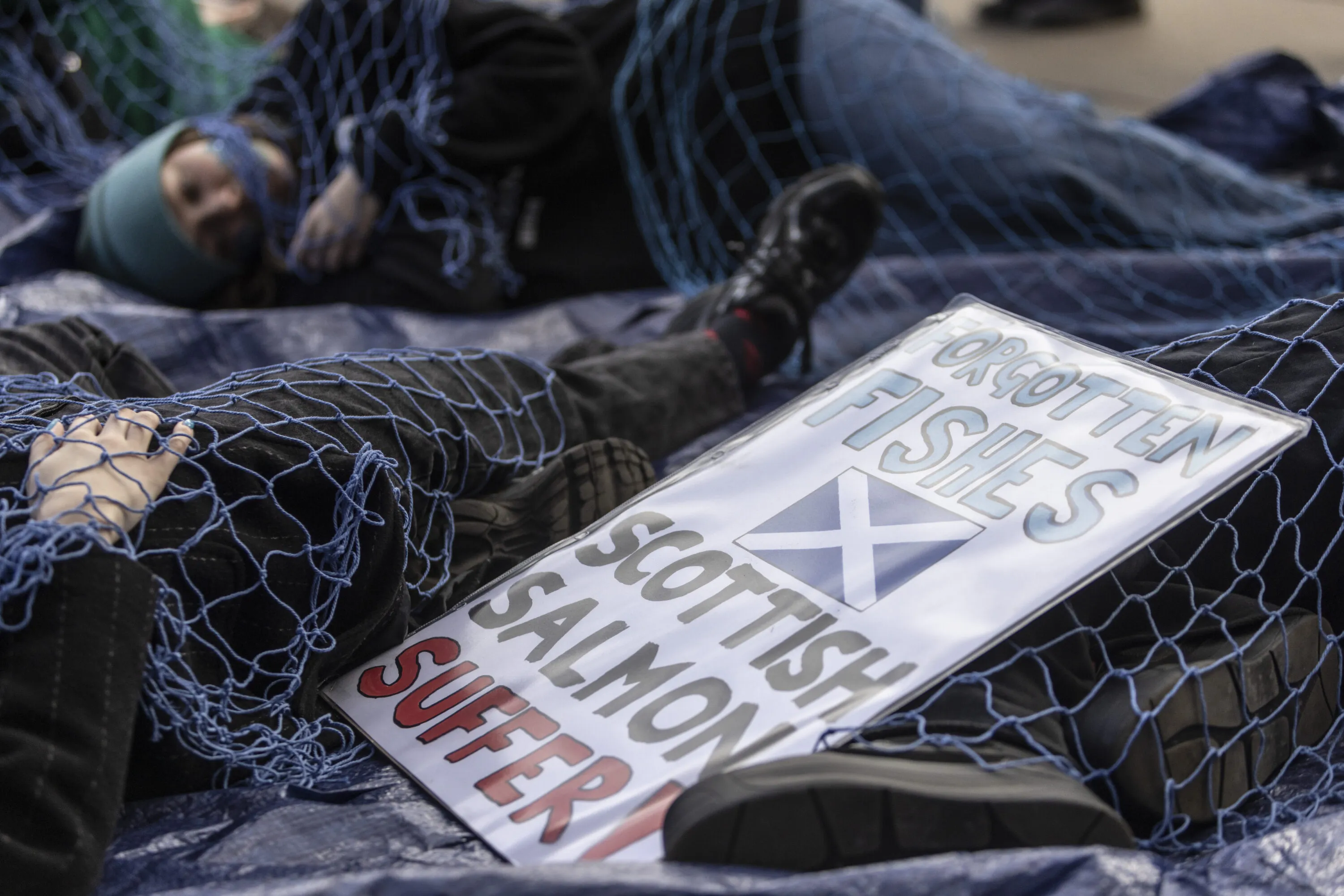
Abigail Penny said:
Animals are being abandoned to starve and rot in lice-infested waters. Companies are misleading regulators. Inspectors are conducting visits by phone. And the Scottish Government calls this world-class regulation. Pull on any thread and the whole thing unravels. The Scottish Government simply cannot continue to act as though nothing is wrong here-we need to put the brakes on this industry’s expansion.
What’s Next?
Just like other animals, salmon feel pain and they suffer. Add your voice to defend the millions of fish trapped in farms across Scotland and call for an urgent end to this industry’s expansion.

Thank you so much for signing the petition. Small actions like this add up and change the world!
Farmed fish are often forgotten, but you can lend your voice to speak up for them. Please help by sharing this petition with your friends and social media followers.
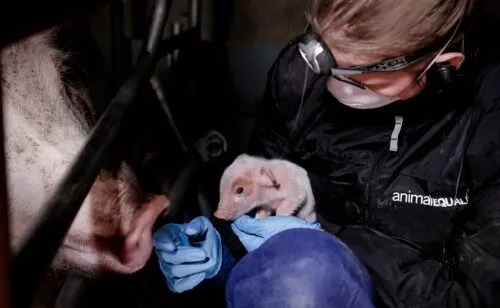
Thank you again for your support – it will make a huge difference for animals.
Our brave investigators work incredibly hard to expose animal abuse so that, together, we can end it. Make a donation today to help keep them in the field.
Take a stand to help fish. Sign now!
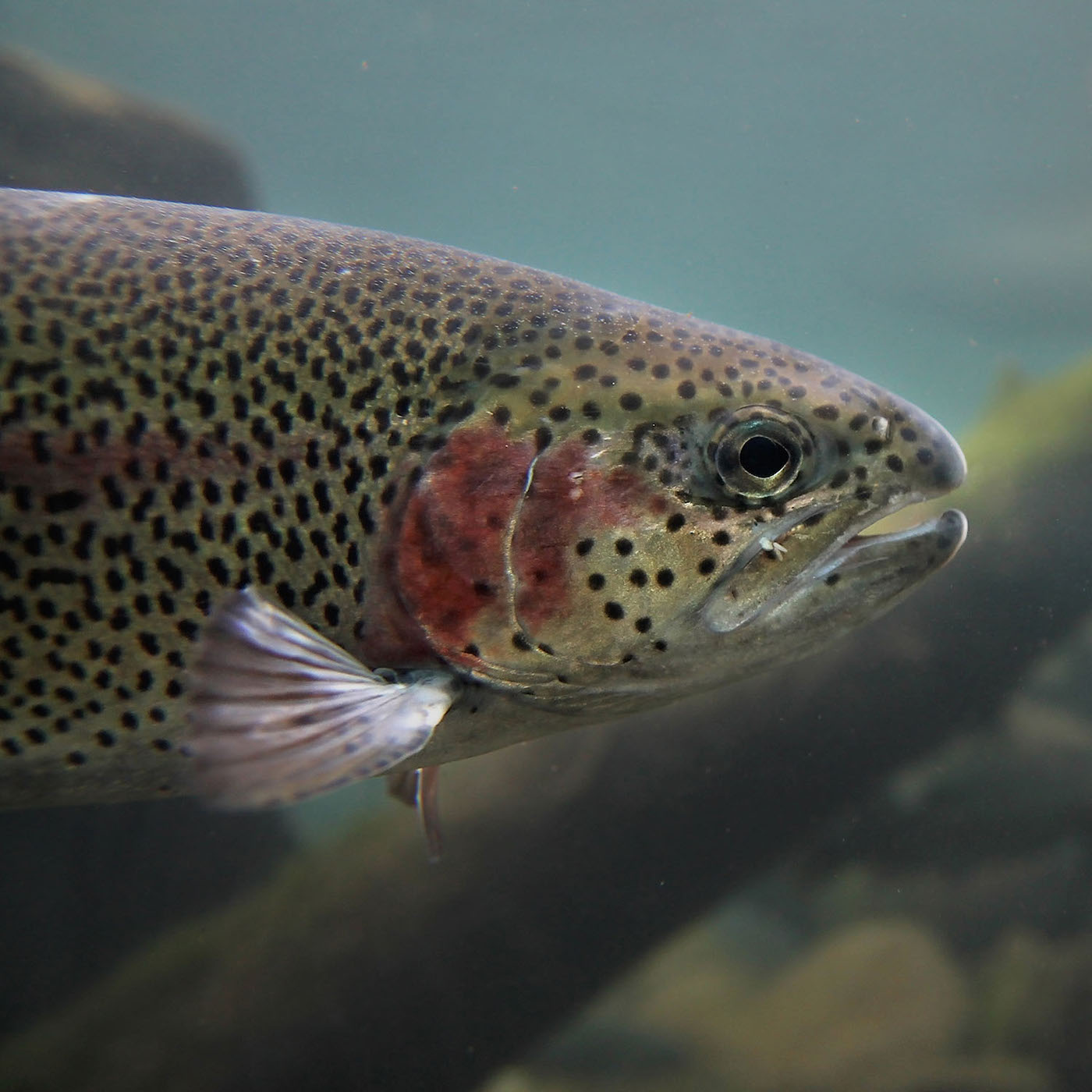
Protect Fish
Scientists confirm that fish feel pain and suffer. Protect these sensitive beings by choosing plant-based alternatives to animal food products.