Trade experts warn foie gras import ban at risk without greater Government transparency
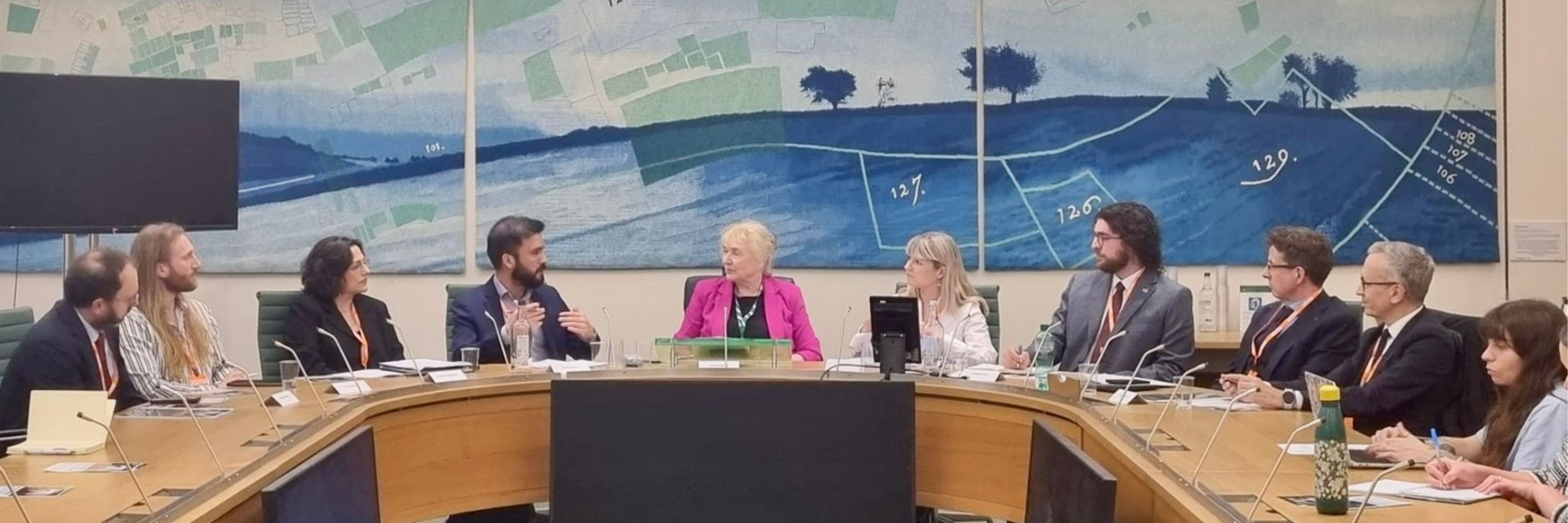
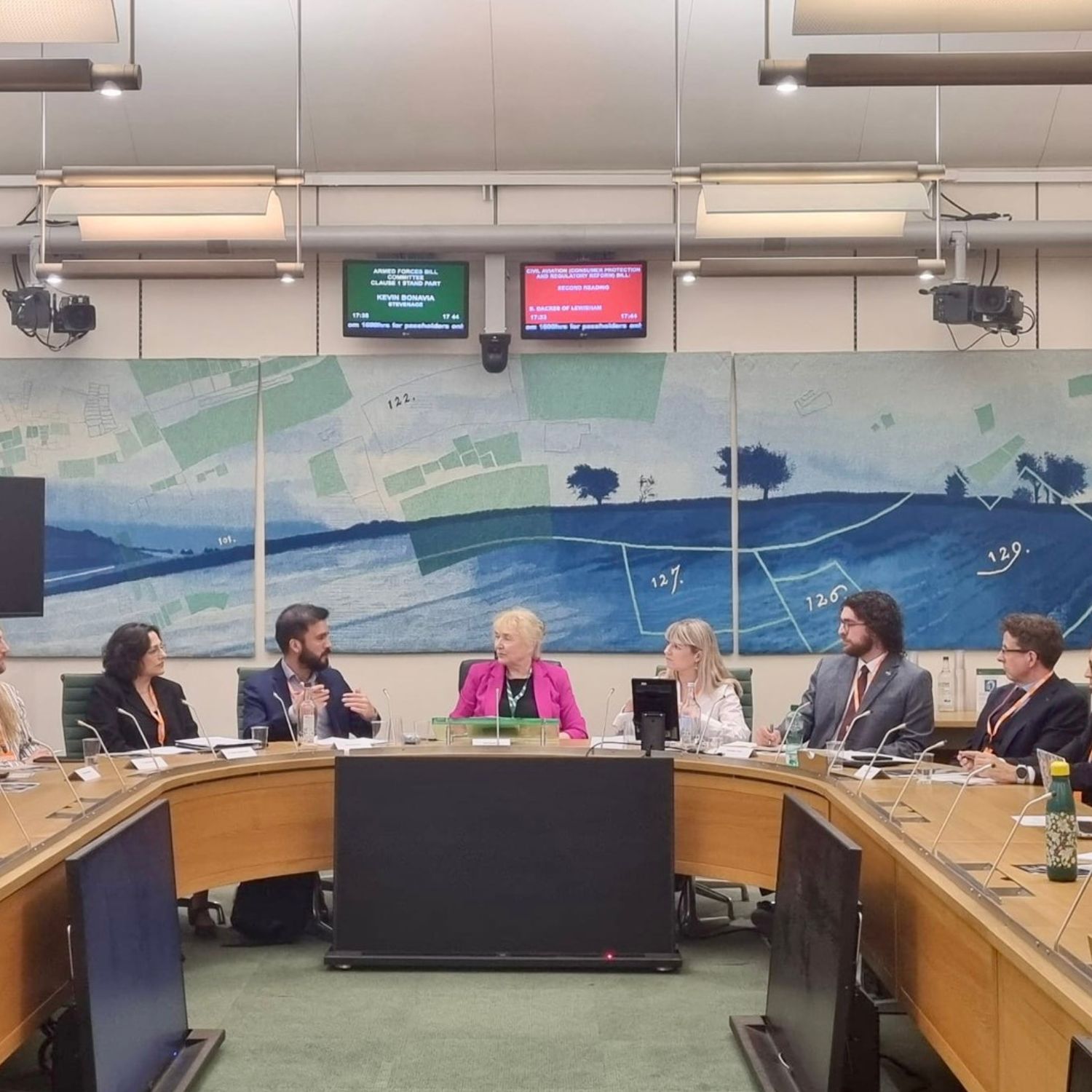
Animal Equality UK coordinated a Parliamentary roundtable at Portcullis House today, bringing together MPs, animal welfare scientists, international trade law experts, and European policy advocates to address a mounting concern: that the Government’s commitment to ban foie gras imports could quietly be traded away during ongoing UK-EU negotiations.
The event was hosted by Labour MP Irene Campbell, one of Parliament’s leading voices on animal protection. Opening the discussion, Campbell was direct about the growing concerns over the long-awaited foie gras import ban: “I don’t understand why in 2026 we’re still selling this product in the UK,” she said, noting that nearly nine in ten Brits surveyed (excluding the “don’t know” responses) are in favour of a ban. She highlighted her role on the Petitions Committee as giving her particular insight into the strength of public feeling and that foie gras – produced by force-feeding ducks and geese – prompted public outcry.
Overwhelming support for a ban on foie gras imports
Animal Equality has been leading the charge in calling for a foie gras import ban for years. Our petition that surpassed 318,000 signatures, we have garnered cross-party political support and a pre-election commitment – with one key member of the Government filming himself watching Animal Equality footage from French foie gras farms and declaring that “a vote for Labour is a vote for animals.” But panelists on the roundtable stressed the urgency of the moment: with UK-EU trade negotiations taking place under the so-called SPS Agreement (Sanitary and Phytosanitary), critical conversations are taking place largely behind closed doors, meaning there is a real risk that the foie gras commitment could be delayed, weakened, or abandoned without any public scrutiny.
The case against force-feeding of animals
Anyone who has watched Animal Equality’s investigations inside foie gras farms will immediately realise the needless violence inflicted on these animals for a ‘luxury’ pȃté. Ducks and geese are confined in small wire cages, held down, and force-fed with a long metal pipe, in a process known as ‘gavage’. This is carried out multiple times a day for several weeks, until the animals’ livers become diseased and swell to the size of a small football. At this time, the animals are slaughtered.
The welfare case against foie gras was set out in stark terms by panelist Dr Huw Golledge, Chief Executive and Scientific Director of the Universities Federation for Animal Welfare. “The disease is not a side effect,” he said. “Causing the disease is the purpose of the production system.” Golledge explained that foie gras production deliberately induces fatty liver disease – livers can grow to up to ten times their normal size, compressing internal organs and reducing respiratory capacity. Birds are force-fed via metal tubes inserted into their oesophagus multiple times a day, sustaining physical injury and showing signs of distress. Mortality rates are 2–5% higher than in conventional duck production. “Anyone looking objectively at the evidence would conclude that this is something that should not continue,” he said, adding that the science has pointed clearly in this direction for decades. This is unsurprising, since the UK banned foie gras made by force-feeding two decades ago on grounds of animal cruelty; force-feeding an animal for human consumption is a crime in the UK, however we hypocritically continue to allow the product to be imported.
Complex trade deals shielded by secrecy
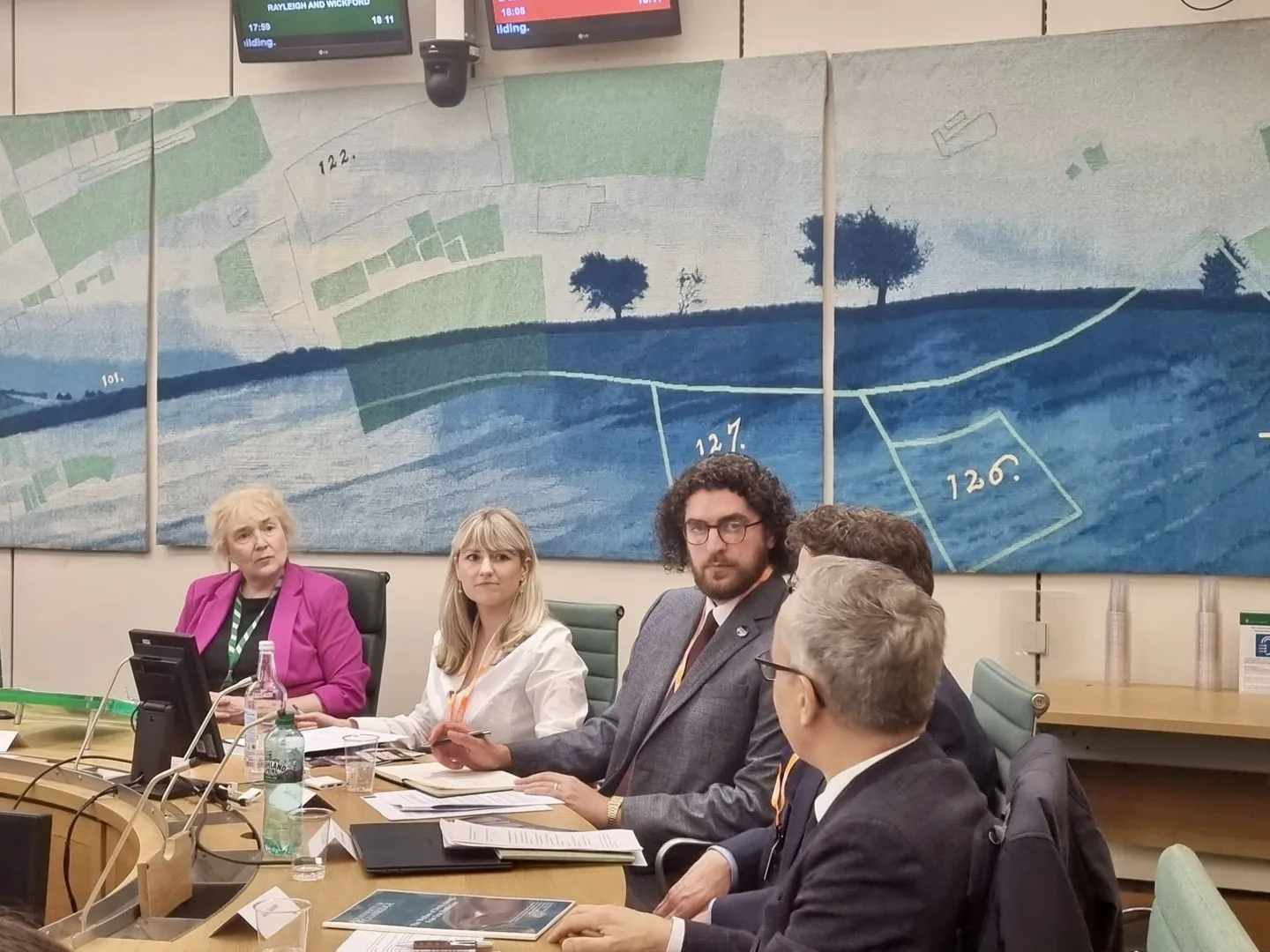
On the legal and trade dimensions, experts cautioned that the picture is more complex than it might appear. Panelist Dr Carolina Maciel, a Research Fellow at Harvard Law School’s Animal Law and Policy Program, warned that the greatest risk may not be a formal legal prohibition but how negotiators choose to define the scope of future agreements. Animal welfare, she noted, does not neatly fit within traditional SPS frameworks, which are designed primarily around disease risk – and crucially, animal welfare was not explicitly included when the UK-EU “reset” was first announced.
Panelist Professor Lorand Bartels MBE, Professor of International Law at Cambridge, agreed that much remains uncertain. A foie gras import ban could potentially be defended under WTO “public morals” provisions – the same legal basis used to restrict imports into the UK of ivory and seal fur – but this will depend on the wording of the final agreement. “There are far too many variables to know for sure,” he said.
Support from EU politicians
The roundtable was also addressed by Tilly Metz MEP via video, who highlighted a letter she initiated which was signed by 40 Members of the European Parliament – including representatives from foie gras-producing countries – calling for stronger protections.
The meeting closed with a discussion of next steps. Campbell offered to support a follow-up parliamentary drop-in event and said she would continue submitting written questions to Ministers. Participants also discussed the potential for the Animal Sentience Committee to examine the issue, the value of scenario-planning documents mapping out different negotiation outcomes, and the importance of continued constituent pressure on MPs.
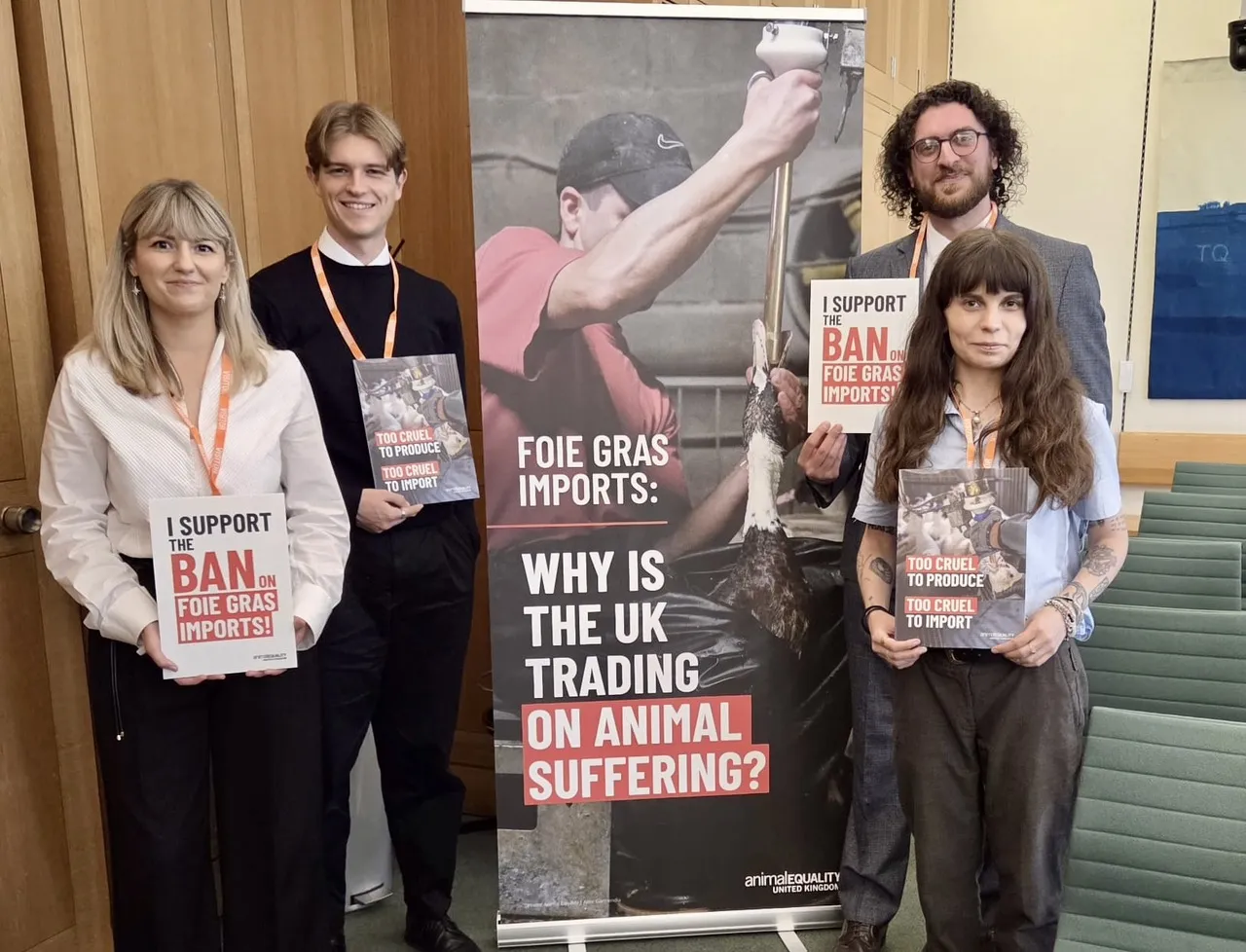
Animals are reliant on political will
Panelist Dr Iyan Offor of the University of Birmingham noted that this political hesitation is a familiar pattern. “Trade negotiations can create a chilling effect even where animal welfare measures remain legally possible,” he said. A foie gras import ban is unlikely to be legally impossible, but depends on political will.
That view was echoed by veteran campaigner Adolfo Sansolini, who has worked on foie gras and live animal transport at the EU, WTO and FAO level for decades. He reinforced that “this is fundamentally a question of political will,” and called for strong cross-party pressure on both sides of the Channel.
How you can help
This campaign is urgent and we need your help today. Please:
- Donate to support us in holding the Government accountable for its commitment and to keep the pressure on. Right now, all donations until 30th June or until we reach our ambitious goal of £111k will be matched by another generous anonymous donor at no extra cost to you!
- Sign and share our petition.
- Contact your local MP and urge them to demand that Government Ministers keep their promise and end hypocritical foie gras imports today!
And, of course, it is not only ducks and geese who suffer for human consumption – chickens, cows, fish, sheep, and pigs all endure misery in factory farms around the world. The best way to help animals is to simply not eat them. Enjoy free and delicious recipes today!
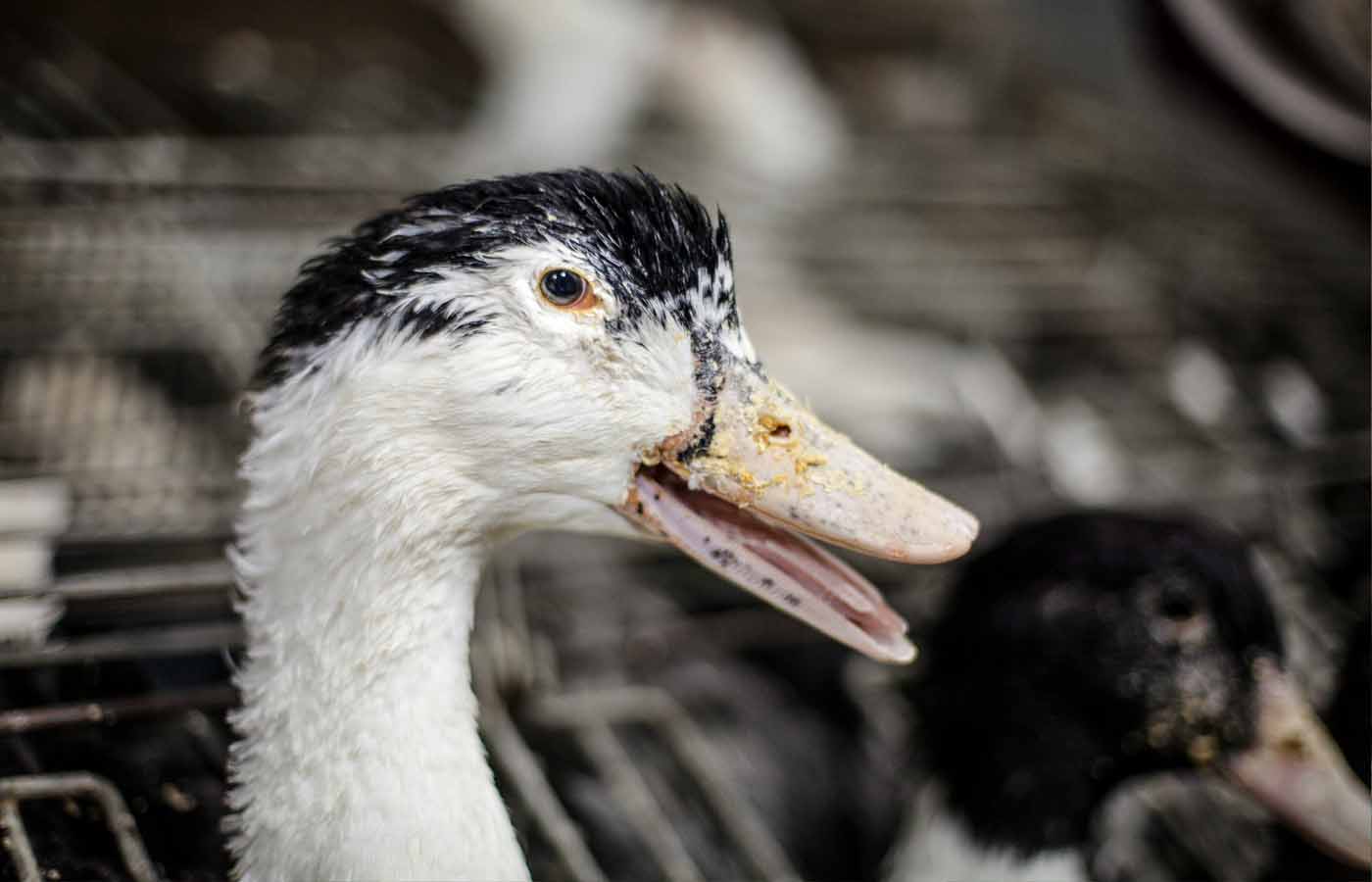
END THE CRUELTY
Foie gras is immensely cruel. Its production causes ducks and geese severe physical and psychological pain. You can protect ducks and geese by opting for plant-based alternatives.