
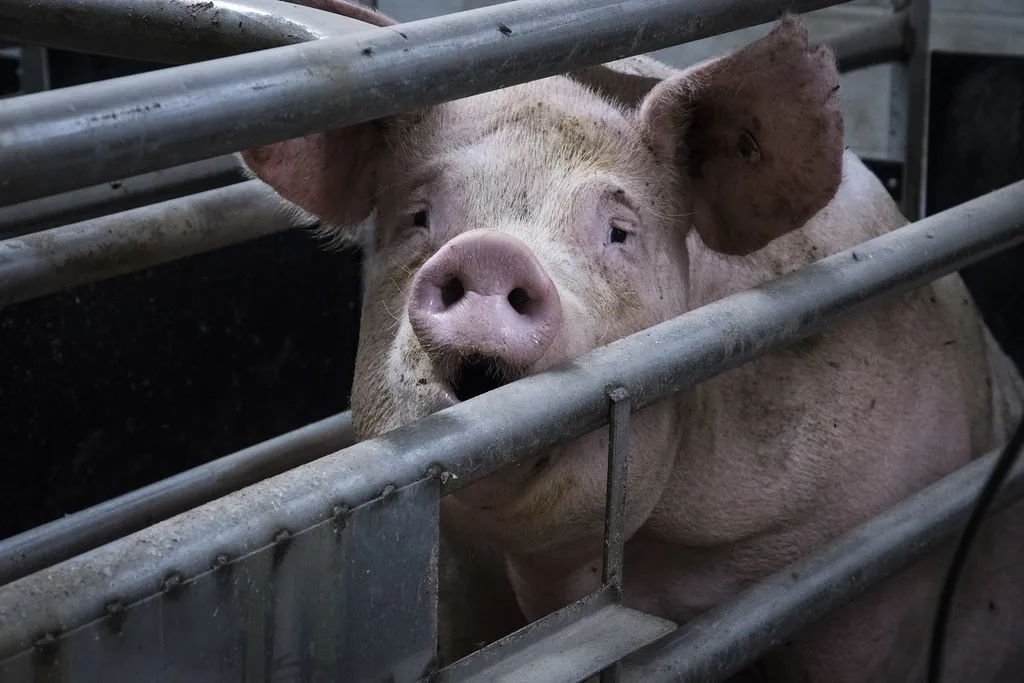
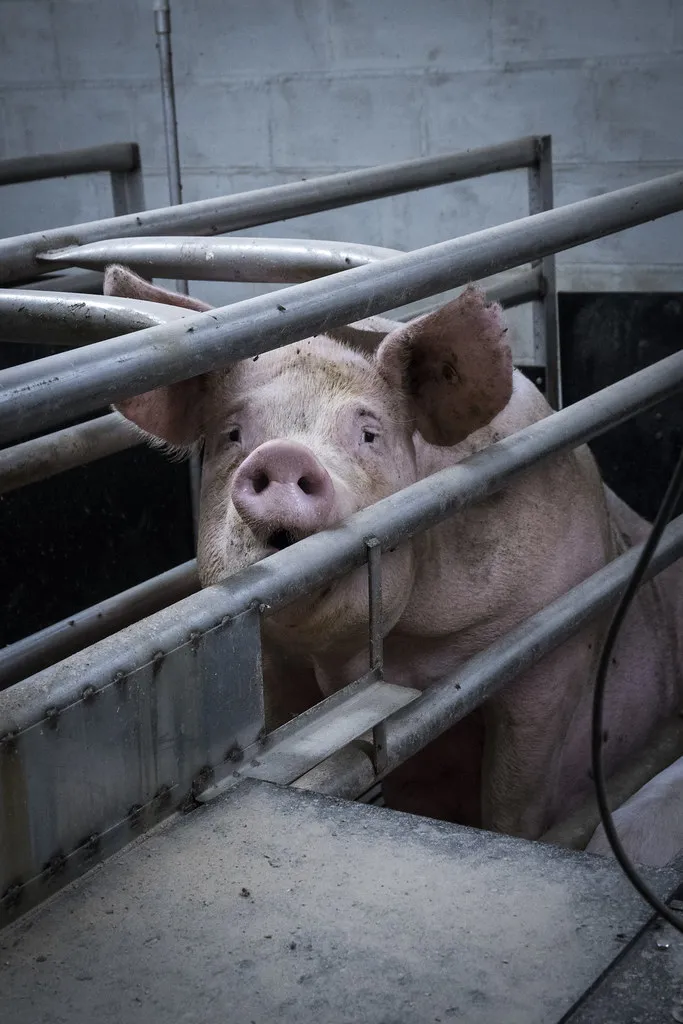
Gasping.
Screaming.
Still legal.
You have until 21st December to help end this cruelty.
90% of pigs in the UK are gassed with CO2 before slaughter, struggling for up to five minutes. The Government is now consulting on a ban. Make sure pigs are heard.
They’re Crying Out. Make Sure They’re Heard.
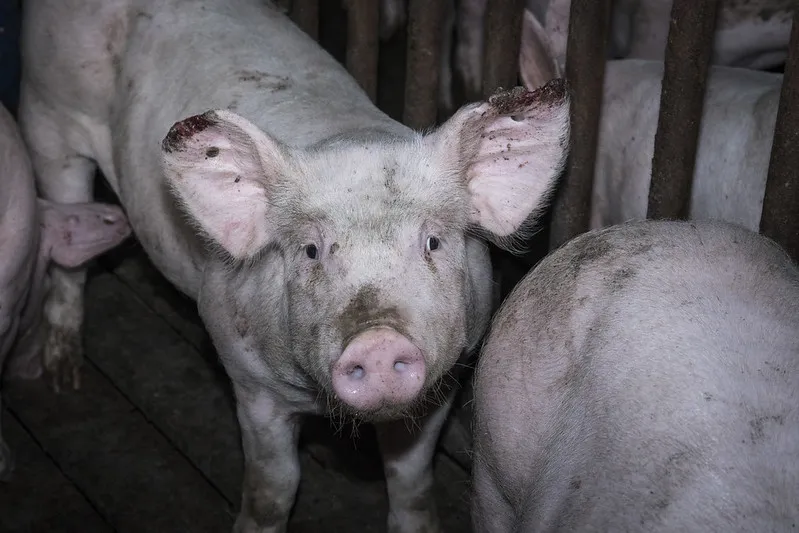
Every month in the UK, nearly a million pigs are lowered into gas chambers, five to seven at a time, in metal cages the industry calls ‘gondolas’. The CO2 burns their eyes and nostrils, and they gasp and scream for up to five minutes before they lose consciousness.
The Government’s own expert advisers have called for this to end for more than 20 years. Now, for the first time, Defra has opened a public consultation on phasing this cruelty out, and it wants to hear from you.
But the Government’s proposed plan would give the industry three more years to keep gassing pigs with CO2. We’re asking for two years at most, and the pig industry will be pushing for even longer. Three years means almost 30 million more pigs gassed, so we’re also calling for a pause on new pig farms and any increase in the number of pigs killed.
Pigs need as many voices as possible on their side. The consultation closes on 21st December 2026.
We’ve made it simple. Follow our guide below, with ready-made answers you can copy and paste, or use our talking points to write your own.
Consultation Guidance
Thank you for being here!
This is one of those moments where public pressure can turn a proposal into real change. The Government is asking for views on ending CO2 gassing of pigs, and your response today can influence what the final policy delivers and how quickly change happens.
Follow this guide and we’ll help you with suggested answers and tips on what to say.
Where is the consultation?
This button will take you to the (external) consultation webpage:
Who can respond?
This consultation covers the whole UK. Anyone can respond.
How long it will take?
We expect this consultation will take around 20–30 minutes to complete, and it will affect around 9.7 million pigs every year.
Time well spent, don’t you think?!
Do I need to be an expert?
Rest assured, you don’t need to be an expert in policy, slaughter methods, or pig farming. All you need to know is that your action today could help end one of the cruellest things pigs endure in the UK.
To see what these gas chambers look like and remember who you’re fighting for, visit our CO2 gassing page.
What should I say?
For each question, we’ve written a suggested answer you can copy and paste straight into the consultation.
Can I write my own answers?
Yes!
Jump to our talking points. Even a few personal edits help make a real difference.
Key message to include where relevant:
- CO2 causes pigs severe pain and fear before they lose consciousness.
- The Government’s own welfare advisers have recommended an ending to CO2 gassing for more than 20 years.
- We’re calling for a UK-wide ban that protects every pig, with no exemptions and a transition of two years at most.
- Even argon, the likely replacement, can still cause suffering. That’s why we’re also asking for a pause on new pig farms and on any increase in the number of pigs farmed and killed, until there’s a method that reliably causes immediate unconsciousness without pain.
Our Answers
Below are our answers to the consultation. You can use these as your answers by copying and pasting each into the respective section.
If you want to write your own answers, use our talking points.
Q9a: Should the use of carbon dioxide when stunning pigs be banned?
❑ Yes
Q9b: Please explain your response and provide evidence where possible.
I strongly support a ban. High concentrations of CO2 cause pigs agonising pain before they lose consciousness. They struggle to breathe and can cry out in fear. The Government’s own welfare advisers have recommended ending this method, including CO2 mixed with other gases. There should be no exemption for smaller businesses. Every pig deserves the protection of a properly enforced ban.
Q10a: If the use of carbon dioxide when stunning pigs is going to be banned, do you agree that a three-year transition period should be given?
❑ Disagree, it is too long
Q10b: Please explain your response and provide evidence where possible.
Three years is too long. We have known about this suffering extremely for decades. Defra estimates that around 9.7 million pigs are subjected to CO2 stunning in the UK each year. I support a maximum of two years, with earlier changes wherever they can be made safely. The law needs to be passed promptly. Slaughterhouses should have to show progress well before the final deadline, so this agonising suffering ends as soon as possible.
Three years is too long. We have known about this suffering extremely for decades. Defra estimates that around 9.7 million pigs are subjected to CO2 stunning in the UK each year. I support a maximum of two years, with earlier changes wherever they can be made safely. The law needs to be passed promptly. Slaughterhouses should have to show progress well before the final deadline, so this agonising suffering ends as soon as possible.
I am concerned that businesses may leave the changes until the last minute, then ask for more time because of the cost. There needs to be a firm deadline, and any request for more time should be checked independently. Replacement equipment must be tested before use, and staff need proper training. Pigs should be monitored throughout stunning so that a failed stun is dealt with immediately. The change must also be planned around pigs already on farms, so they are not left waiting in overcrowded conditions or sent on unnecessary journeys.
Q12: The Consultation Impact Assessment assumes that industry would move to argon gas stunning as an alternative to carbon dioxide. What is your preferred alternative stunning method to carbon dioxide?
❑ Argon gas
Q13a: The Consultation Impact Assessment explores options such as increasing working hours or installing additional equipment to help maintain the number of pigs processed if alternative stunning methods are introduced. How likely do you think that these options would maintain current processing levels?
❑ Don’t know
Q13b: Please explain your answer (if possible)
Maintaining current killing levels should not be a condition for ending CO2 stunning. The Government should examine whether a planned reduction in the number of pigs bred and killed could help end this practice sooner. Pigs already on farms must be protected throughout the change.
Q14: Are you currently a pig processor or part of an organisation representing or supplying pig processors?
❑ No [skip to Q44]
Q44: Are you a supplier of either carbon dioxide or argon gas?
❑ No [Skip to Q53]
Q53: Are you a retailer, food manufacturer or involved in food services?
❑ No [skip to Q57]
Q57: Do you have any additional information or evidence that you wish to share in relation to costs or feasibility?
Defra’s own assessment finds that the welfare benefits of switching to argon are worth far more to society than the change costs businesses. Requests for more time should be backed by evidence and checked independently. I also want the Government to look at whether breeding and killing fewer pigs could make the change easier, so CO2 stunning ends sooner.
Q58a: Do you think that introducing a ban on high concentration carbon dioxide stunning of pigs would increase imports of pork and pork products to the UK?
❑ Not sure
Q58b: Please explain your response and provide evidence where possible.
I cannot predict how imports would change – concern about trade should not delay the ban. But pigs killed overseas deserve the same protection, so the Government should also ban imports of products from pigs stunned with CO2, including CO2 mixed with other gases. I want compulsory labels saying how pigs were stunned, including on imported products, with checks to make sure the information is accurate. The Government must secure the arrangements needed to introduce and enforce these requirements, including under its trade arrangements with the EU. It should also monitor imports and act to prevent this reform from shifting suffering overseas.
Q59a: Do you think that introducing a domestic ban on high concentration carbon dioxide stunning of pigs would increase exports of pork and pork products from the UK?
❑ Not sure
Q59b: Please explain your response and provide evidence where possible
I do not know whether exports would increase. That does not affect my support for a ban. Pigs should be protected from this suffering regardless of how much businesses can sell overseas. Any claims about better welfare must be backed by rules that are actually enforced. I want public reports showing how often stunning fails at each slaughterhouse and what action is taken when rules are broken.
Q60. Please provide any comments or evidence on the environmental impacts the proposed policy may have.
[We recommend that you leave this blank.]
Q61. Please provide any comments or evidence you feel should be considered concerning the socio-economic impact the proposed policy may have on both producers and consumers.
Defra expects a switch to argon to have very little effect on consumer prices. Protecting pigs from painful stunning needs to be a legal minimum. It should not depend on people choosing a more expensive product. Workers will need proper training as methods change. If public money is provided, it should pay for verified welfare improvements and must not fund an increase in the number of pigs bred and killed. I also want a planned reduction in pig farming, with plant-based foods made affordable and easy to find.
Q62. Do you have any further comments you wish to make on the proposal?
Please end CO2 stunning across the UK within two years at most. There should be no exemptions for smaller businesses. No new or expanded CO2 stunning systems should be permitted during the transition.
New pig farms and increases in the number of pigs farmed and slaughtered should be paused, including after the switch to argon. The pause should remain until methods that make pigs unconscious immediately and without pain have been independently shown to work reliably in commercial slaughterhouses. These methods must also minimise distress from handling and restraint. Facilities using them must already be operating and available to those pigs. Work needed to replace CO2 equipment or improve conditions for pigs already on farms should still be allowed.
Argon can reduce suffering, but it is far from ‘humane’ and must not be where progress stops. Inspections must check what happens to pigs in practice, and the findings should be public. I also want a planned reduction in the number of pigs bred and killed.
Pigs killed during the transition deserve the same concern as those the ban will eventually protect. That is why I want this suffering to end as soon as it safely can.
Completed the Consultation?
Click the button below to let us know! It helps us show the Government how many people are speaking up for pigs.
Prefer to Write your own Answers?
Your own voice is powerful. If you’d prefer to write your answers yourself, use these talking points as a guide.
You can still use the same tick-box answers from the guide above.
Q9b: Why should CO2 stunning be banned?
- CO2 causes pigs severe pain before they lose consciousness. They struggle to breathe and can cry out in fear.
- The Government’s own welfare advisers have recommended ending this method, including CO2 mixed with other gases.
- The ban should protect every pig, including those killed by smaller businesses.
- Effective enforcement is essential to make the protection work.
Q10b: Why is three years too long?
- The suffering caused by CO2 stunning has been known for decades.
- Defra estimates that around 9.7 million pigs are subjected to this method in the UK each year.
- Support a maximum two-year transition, with earlier changes wherever they can be made safely.
- Ask for prompt legislation and clear requirements for slaughterhouses to show progress before the final deadline.
Q11: Barriers to switching
- Businesses may delay making changes and then use costs as a reason to request more time.
- A firm deadline is needed. Claims that businesses need longer should be backed by evidence and checked independently.
- Replacement equipment must be properly tested, and staff must receive adequate training.
- Pigs must be monitored throughout stunning, with immediate backup stunning when needed.
- Planning must protect pigs already on farms from overcrowding, prolonged waits and unnecessary journeys.
Q13b: Maintaining processing levels
- Maintaining the current number of pigs killed should not be a condition for ending CO2 stunning.
- A planned reduction in the number of pigs bred and killed could help the change happen sooner.
- Pigs already on farms must be protected throughout the transition.
Q57: Costs and feasibility
- Defra’s assessment estimates that the benefits to society from improved welfare substantially outweigh the costs to businesses of switching to argon.
- Requests for a longer transition should be supported by evidence and checked independently.
- The Government should examine whether breeding and killing fewer pigs could make the transition easier and bring forward the end of CO2 stunning.
Q58b: Imports
- Uncertainty about whether imports would increase should not delay the ban.
- Pigs killed overseas deserve the same protection. Support a ban on imports of products from pigs stunned with CO2, including mixtures with other gases.
- Compulsory labels should identify the stunning method used, including on imported products, with checks to ensure accuracy.
- The Government should secure the arrangements needed to introduce and enforce these requirements, including under its trade arrangements with the EU.
- Imports should be monitored so the reform does not shift the same suffering overseas.
Q59b: Exports
- It’s unclear whether exports would increase. The ban should go ahead regardless of any commercial benefit overseas.
- Claims about better welfare must be supported by rules that are enforced.
- Public reports should show how often stunning fails at each slaughterhouse and what action follows breaches of the rules.
Q61: Impact on producers and consumers
- Defra expects a switch to argon to have very little effect on consumer prices.
- Protecting pigs from painful stunning should be a legal minimum, regardless of whether consumers choose more expensive products.
- Workers need proper training as methods change.
- Any public funding should deliver verified welfare improvements and must not fund an increase in the number of pigs bred and killed.
- Support a planned reduction in pig farming, alongside affordable and accessible plant-based foods.
Q62: Further comments
- Support a UK-wide ban within two years at most, without exemptions for smaller businesses.
- No new or expanded CO2 stunning systems should be permitted during the transition.
- Call for a pause on new pig farms and on increases in the number of pigs farmed and killed. This should continue beyond the switch to argon.
- The pause should remain until independently tested methods reliably cause immediate unconsciousness without pain in commercial slaughterhouses, and minimise distress from handling and restraint.
- Facilities using those methods must already be operating and available to the pigs concerned.
- Work needed to replace CO2 equipment or improve conditions for pigs already on farms should still be allowed.
- Argon can reduce suffering, but welfare concerns remain and progress must continue.
- Inspections should assess what happens to pigs in practice, with findings made public.
- Pigs killed during the transition deserve the same concern as those the eventual ban will protect. Their suffering makes prompt action necessary.
Completed the Consultation?
Click the button below to let us know! It helps us show the Government how many people are speaking up for pigs.
Protect pigs
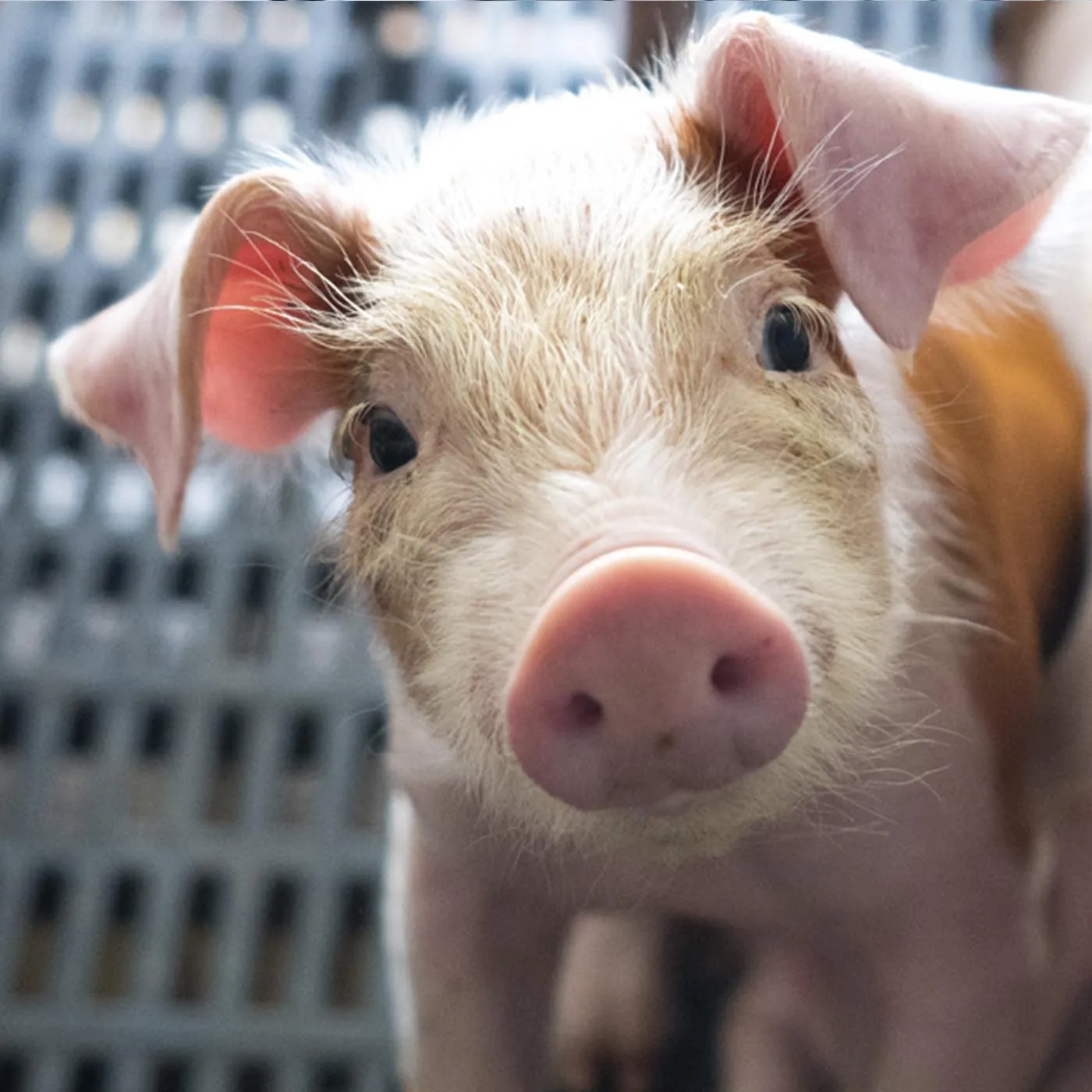
Pigs are highly social animals who are often considered smarter than dogs. You can protect these intelligent animals by simply choosing plant-based alternatives.